Listed as the best book you've never heard of and it's true! Published in the 1859, this is a classic that isn't as known (but should be). I've been talking this up to all my bookish friends and I've not come across one who has heard of it. This, my friends, is the basis of detective fiction novels. Doyle based his character and stories on this novel. It was initially published as a serial so essentially each chapter ends as a cliffhanger and just keeps forcing you to read and curse anything that tries to distract you.
I listened to this through Craftlit, because Heather does a great job with explanations (she's a teacher). But you can also grab it for free from Librivox.
Walter Hartright is a young artist who gets a job at Limmeridge House to teach and mentor two young ladies in drawing, Laura Fairlie, a beautiful wealthy blonde, and Marian Halcombe, Laura's half-sister, most noted to be not as attractive but turns out to be one of the best written female characters.
On the way to Limmeridge, Walter encounters the woman in white. She's lost and needs assistance to get to where she needs to go. After assisting her, Walter finds out that she's escaped from a mental asylum. He uses the experience as a tale to tell the young ladies and finds out that the woman in white is actually Anne Catherick, who knew Laura's mother.
As expected, Walter falls for Laura but Laura is promised to Sir Percival Glyde in marriage. Glyde's best bud, Count Fosco, married to Laura's aunt, completes the crew that we end up watching throughout the book.
The book is told in narratives, each voiced by a different character. We start off with Walter's POV and then jump into others. This allows us to get a full picture of the mystery and how it started and where it went. But.....it's hard to tell, when the story is laid out, which narrator can be trusted. (Walter is a bit boring at first, but stick with him.)
Every time I was able to turn this book on, I was engrossed. If you are unsure about "the classics", start here!
Saturday, November 17, 2018
Sunday, November 11, 2018
Big Damn Classic of 2019
As in years past, I have a list of classics that I want to read but am hard pressed to pick the ONE. The Big Damn Classic of the year. Hold up, Miss Thang, you might be saying. The people picked SlaughterHouse-Five for your classic of 2018 and I don't see that review anywhere!
You are right. *hanging head*
This year hasn't been my most prolific in reading (I'm not even going to bring up my Goodreads reading challenge - wait...I just did). However, I did just this second queue up Slaughterhouse-Five on my Kindle and it's ready to go. I'm finishing To The Lighthouse for a book club, then it's on. I'm still listening to Woman in White by Wilkie Collins and damn, if this shouldn't have been a Big Damn Classic. Review coming soon!
The contenders for 2019 do contain some possibles from previous years and some new ones!
Here ...we....go
The Adventures of Huckleberry Finn by Mark Twain
Pub: 1884
The book opens with a description of Huck’s new life as he undergoes a process of “civilization” while living with the Widow Douglas and her sister Miss Watson. Although he dislikes the strict regime of education, manners, church and rigid clothing, which are a necessity to fit into society, Huck prefers anything to his previous life with his drunkard father Pap. However, just as things begin to stabilize, Pap returns to the picture and demands Huck give him the money that he had previously attained during an adventure with his best friend Tom Sawyer. Huck’s refusal to do so only infuriates Pap. Just when things are improving for Huck, he is kidnapped and mistreated by his no-good father. After faking his own death and on the run, he meets Jim who is a runaway slave with a bounty to his name. Huck must decide whether to trust his gut feeling and help an innocent flee slavery, or view the poor man simply as property. Caught up between ethics and legality, Huck must make a decision. The two set out together on a raft, both in search of freedom and experience many challenges on the way whilst at the same time an emotional bond is developed.
David Copperfield by Charles Dickens
Pub: 1849
David Copperfield is the story of a young man's adventures on his journey from an unhappy and impoverished childhood to the discovery of his vocation as a successful novelist. Among the gloriously vivid cast of characters he encounters are his tyrannical stepfather, Mr Murdstone; his brilliant, but ultimately unworthy school-friend James Steerforth; his formidable aunt, Betsey Trotwood; the eternally humble, yet treacherous Uriah Heep; frivolous, enchanting Dora Spenlow; and the magnificently impecunious Wilkins Micawber, one of literature's great comic creations. In David Copperfield - the novel he described as his 'favourite child' - Dickens drew revealingly on his own experiences to create one of the most exuberant and enduringly popular works, filled with tragedy and comedy in equal measure.
Roots by Alex Haley
Pub: 1976
Haley has done more than recapture the history of his own family. As the first black American writer to trace his origins back to their roots, he has told the story of 25,000,000 Americans of African descent. He has rediscovered for an entire people a rich cultural heritage that slavery took away from them, along with their names and their identities. But Roots speaks, finally, not just to blacks, or to whites, but to all people and all races everywhere, for the story it tells is one of the most eloquent testimonials ever written to the indomitability of the human spirit.
The War of the Worlds by H.G. Wells
Pub: 1898
The War of the Worlds is a science fiction novel by English author H. G. Wells first serialised in 1897 by Pearson's Magazine in the UK and by Cosmopolitan magazine in the US. The novel's first appearance in hardcover was in 1898 from publisher William Heinemann of London. Written between 1895 and 1897, it is one of the earliest stories that detail a conflict between mankind and an extraterrestrial race.The novel is the first-person narrative of both an unnamed protagonist in Surrey and of his younger brother in London as southern England is invaded by Martians. The novel is one of the most commented-on works in the science fiction canon.
Don Quixote by Miguel de Cervantes Saavedra
Pub: 1605
Don Quixote has become so entranced by reading chivalric romances, that he determines to become a knight-errant himself. In the company of his faithful squire, Sancho Panza, his exploits blossom in all sorts of wonderful ways. While Quixote's fancy often leads him astray – he tilts at windmills, imagining them to be giants – Sancho acquires cunning and a certain sagacity. Sane madman and wise fool, they roam the world together, and together they have haunted readers' imaginations for nearly four hundred years.
With its experimental form and literary playfulness, Don Quixote generally has been recognized as the first modern novel. The book has had enormous influence on a host of writers, from Fielding and Sterne to Flaubert, Dickens, Melville, and Faulkner, who reread it once a year, "just as some people read the Bible."
North and South by Elizabeth Gaskell
Pub: 1855
When her father leaves the Church in a crisis of conscience, Margaret Hale is uprooted from her comfortable home in Hampshire to move with her family to the north of England. Initially repulsed by the ugliness of her new surroundings in the industrial town of Milton, Margaret becomes aware of the poverty and suffering of the local mill workers and develops a passionate sense of social justice. This is intensified by her tempestuous relationship with the mill-owner and self-made man, John Thornton, as their fierce opposition over his treatment of his employees masks a deeper attraction.
In North and South, Elizabeth Gaskell skillfully fuses individual feeling with social concern, and in Margaret Hale creates one of the most original heroines of Victorian literature.
All descriptions from Goodreads
Now it's time to vote! Vote as much as you like up until 1/1/2019
Vote here!
You are right. *hanging head*
This year hasn't been my most prolific in reading (I'm not even going to bring up my Goodreads reading challenge - wait...I just did). However, I did just this second queue up Slaughterhouse-Five on my Kindle and it's ready to go. I'm finishing To The Lighthouse for a book club, then it's on. I'm still listening to Woman in White by Wilkie Collins and damn, if this shouldn't have been a Big Damn Classic. Review coming soon!
The contenders for 2019 do contain some possibles from previous years and some new ones!
Here ...we....go
The Adventures of Huckleberry Finn by Mark Twain
Pub: 1884
The book opens with a description of Huck’s new life as he undergoes a process of “civilization” while living with the Widow Douglas and her sister Miss Watson. Although he dislikes the strict regime of education, manners, church and rigid clothing, which are a necessity to fit into society, Huck prefers anything to his previous life with his drunkard father Pap. However, just as things begin to stabilize, Pap returns to the picture and demands Huck give him the money that he had previously attained during an adventure with his best friend Tom Sawyer. Huck’s refusal to do so only infuriates Pap. Just when things are improving for Huck, he is kidnapped and mistreated by his no-good father. After faking his own death and on the run, he meets Jim who is a runaway slave with a bounty to his name. Huck must decide whether to trust his gut feeling and help an innocent flee slavery, or view the poor man simply as property. Caught up between ethics and legality, Huck must make a decision. The two set out together on a raft, both in search of freedom and experience many challenges on the way whilst at the same time an emotional bond is developed.
David Copperfield by Charles Dickens
Pub: 1849
David Copperfield is the story of a young man's adventures on his journey from an unhappy and impoverished childhood to the discovery of his vocation as a successful novelist. Among the gloriously vivid cast of characters he encounters are his tyrannical stepfather, Mr Murdstone; his brilliant, but ultimately unworthy school-friend James Steerforth; his formidable aunt, Betsey Trotwood; the eternally humble, yet treacherous Uriah Heep; frivolous, enchanting Dora Spenlow; and the magnificently impecunious Wilkins Micawber, one of literature's great comic creations. In David Copperfield - the novel he described as his 'favourite child' - Dickens drew revealingly on his own experiences to create one of the most exuberant and enduringly popular works, filled with tragedy and comedy in equal measure.
Roots by Alex Haley
Pub: 1976
Haley has done more than recapture the history of his own family. As the first black American writer to trace his origins back to their roots, he has told the story of 25,000,000 Americans of African descent. He has rediscovered for an entire people a rich cultural heritage that slavery took away from them, along with their names and their identities. But Roots speaks, finally, not just to blacks, or to whites, but to all people and all races everywhere, for the story it tells is one of the most eloquent testimonials ever written to the indomitability of the human spirit.
The War of the Worlds by H.G. Wells
Pub: 1898
The War of the Worlds is a science fiction novel by English author H. G. Wells first serialised in 1897 by Pearson's Magazine in the UK and by Cosmopolitan magazine in the US. The novel's first appearance in hardcover was in 1898 from publisher William Heinemann of London. Written between 1895 and 1897, it is one of the earliest stories that detail a conflict between mankind and an extraterrestrial race.The novel is the first-person narrative of both an unnamed protagonist in Surrey and of his younger brother in London as southern England is invaded by Martians. The novel is one of the most commented-on works in the science fiction canon.
Don Quixote by Miguel de Cervantes Saavedra
Pub: 1605
Don Quixote has become so entranced by reading chivalric romances, that he determines to become a knight-errant himself. In the company of his faithful squire, Sancho Panza, his exploits blossom in all sorts of wonderful ways. While Quixote's fancy often leads him astray – he tilts at windmills, imagining them to be giants – Sancho acquires cunning and a certain sagacity. Sane madman and wise fool, they roam the world together, and together they have haunted readers' imaginations for nearly four hundred years.
With its experimental form and literary playfulness, Don Quixote generally has been recognized as the first modern novel. The book has had enormous influence on a host of writers, from Fielding and Sterne to Flaubert, Dickens, Melville, and Faulkner, who reread it once a year, "just as some people read the Bible."
North and South by Elizabeth Gaskell
Pub: 1855
When her father leaves the Church in a crisis of conscience, Margaret Hale is uprooted from her comfortable home in Hampshire to move with her family to the north of England. Initially repulsed by the ugliness of her new surroundings in the industrial town of Milton, Margaret becomes aware of the poverty and suffering of the local mill workers and develops a passionate sense of social justice. This is intensified by her tempestuous relationship with the mill-owner and self-made man, John Thornton, as their fierce opposition over his treatment of his employees masks a deeper attraction.
In North and South, Elizabeth Gaskell skillfully fuses individual feeling with social concern, and in Margaret Hale creates one of the most original heroines of Victorian literature.
All descriptions from Goodreads
Now it's time to vote! Vote as much as you like up until 1/1/2019
Vote here!
Tuesday Nights in 1980 by Molly Prentiss
I had expectations going in solely from the title and cover (isn't there wisdom about not judging a book by...something?). The NYC art scene in the '80s sounded intriguing and interesting to me. Prentiss' writing was unexpected but not unliked. I got into that groove fairly quickly. I dove in with her, into Franca's life in Argentina, and was a bit unhappy to be pulled out so quick. Ah, it's ok, I'll find out more later.
Here's my issue with the book.
We touch on some very interesting characters, but only three are actually examined, and, in my mind, the three that we delve into are not the interesting ones. We lost the ones that held my interest and barely touched into another one that was filled with promise.
We lost Franca but gained her brother Raul. There wasn't anything redeeming in his character that made me care for him, nor made me sorry when he had an accident. We have Lucy, who, initially, I was excited to follow. A small town girl from the Midwest heads to NYC for a new, exciting life. Typical but I was hoping her path was atypical. Wrong again! She went the route of sexed-up, secondary character pretty quickly. Then there's James, who has synaesthesia and is an art critic. How he saw life and art was new and exciting and made him the top of the heap in the art world. Alas, his dear wife Marge was relegated to a bit player. I couldn't like James simply for the fact that, as Marge worked full time in an office and not doing her art, James spent every penny he got....not on rent, or food, or anything useful, but on art. And he saw nothing wrong with forcing his wife to work a dull job to keep a roof over their head while he puttered around the art scene.
I'm used to books where every character is nonredeemable (The Great Gatsby, anyone?) but the writing itself usually makes it all worthwhile. The writing here is good, don't get me wrong, but I wanted something else from the characters.
Here's my issue with the book.
We touch on some very interesting characters, but only three are actually examined, and, in my mind, the three that we delve into are not the interesting ones. We lost the ones that held my interest and barely touched into another one that was filled with promise.
We lost Franca but gained her brother Raul. There wasn't anything redeeming in his character that made me care for him, nor made me sorry when he had an accident. We have Lucy, who, initially, I was excited to follow. A small town girl from the Midwest heads to NYC for a new, exciting life. Typical but I was hoping her path was atypical. Wrong again! She went the route of sexed-up, secondary character pretty quickly. Then there's James, who has synaesthesia and is an art critic. How he saw life and art was new and exciting and made him the top of the heap in the art world. Alas, his dear wife Marge was relegated to a bit player. I couldn't like James simply for the fact that, as Marge worked full time in an office and not doing her art, James spent every penny he got....not on rent, or food, or anything useful, but on art. And he saw nothing wrong with forcing his wife to work a dull job to keep a roof over their head while he puttered around the art scene.
I'm used to books where every character is nonredeemable (The Great Gatsby, anyone?) but the writing itself usually makes it all worthwhile. The writing here is good, don't get me wrong, but I wanted something else from the characters.
Sunday, November 4, 2018
Zorba The Greek by Nikos Kazantzakis
This one is a bit spotty for me. I listened to the audio from Audible (and the narrator is amazingly good) for a IRL book club. But I missed the book club with 5 hours left to go and then didn't get back to it until later.
Zorba is both endearing and damn annoying. An older man, he fancies himself a ladies man, who declares that if you just go up to a woman and squeeze her breast, she will be yours. *eyeroll* In the author's world, and Zorba's, this is apparently true. Madame Hortense falls head over heels for Zorba but, it seems to be more of a case of the old lady's loneliness than anything to do with Zorba himself. Zorba shows interest and beds her and she wants marriage and stability. Their back-and-forth is heartbreaking.
Zorba pairs up with the unnamed narrator, I'll call him George, and they head off to re-open an old lignite mine. George is the boss and Zorba supervises the works and works himself to the bone. George is more of an intellectual who wants to finish his manuscript on Buddha while Zorba and the men do the backbreaking work.
I'll say the two end up on several adventures, including setting a monastery on fire (or at least heavily encouraging a crazy monk to do it) but adventures isn't the right word for these two. Joined at the hip, it's their combined lives becoming one.
In the end, I can see why this has been called one of the great friendships ever written.
Zorba is both endearing and damn annoying. An older man, he fancies himself a ladies man, who declares that if you just go up to a woman and squeeze her breast, she will be yours. *eyeroll* In the author's world, and Zorba's, this is apparently true. Madame Hortense falls head over heels for Zorba but, it seems to be more of a case of the old lady's loneliness than anything to do with Zorba himself. Zorba shows interest and beds her and she wants marriage and stability. Their back-and-forth is heartbreaking.
Zorba pairs up with the unnamed narrator, I'll call him George, and they head off to re-open an old lignite mine. George is the boss and Zorba supervises the works and works himself to the bone. George is more of an intellectual who wants to finish his manuscript on Buddha while Zorba and the men do the backbreaking work.
I'll say the two end up on several adventures, including setting a monastery on fire (or at least heavily encouraging a crazy monk to do it) but adventures isn't the right word for these two. Joined at the hip, it's their combined lives becoming one.
In the end, I can see why this has been called one of the great friendships ever written.
Wednesday, October 24, 2018
Be Cool by Elmore Leonard
I started on book #2 of this Chili Palmer series, series = two books. I'm honestly not sure how I liked this book. I was interested but I couldn't just get into it.
Chili is a former wiseguy who got relatively big with the movie Get Leo and bombed with the follow up Get Lost. He starts out meeting with his friend Tommy Athens, a record producer, who ends up with a bullet in the head as Chili is the witness.
Enter Linda Moon, a woman from a dating site whom Chili decides needs to be the star of his next film. Moon is really a musician and, through a series of events, Chili ends up as her manager. All the while, there's Raji (Moon's former manager and a stereotypical pimp) and Elliott (Raji's Samoan gay bodyguard who wants to make it in Hollywood) who want pretty much everyone dead and can't seem to decide who to kill.
Chili cleans up the record company of Tommy's, gets music made, gets people shot, tries to manipulate real-life events so he can have scenes in his movie and starts having sex with HIS manager. And WTF.
I honestly didn't like any character in this book except for Elaine. But I felt I needed to see where it ended. And it ended Meh.
Chili is a former wiseguy who got relatively big with the movie Get Leo and bombed with the follow up Get Lost. He starts out meeting with his friend Tommy Athens, a record producer, who ends up with a bullet in the head as Chili is the witness.
Enter Linda Moon, a woman from a dating site whom Chili decides needs to be the star of his next film. Moon is really a musician and, through a series of events, Chili ends up as her manager. All the while, there's Raji (Moon's former manager and a stereotypical pimp) and Elliott (Raji's Samoan gay bodyguard who wants to make it in Hollywood) who want pretty much everyone dead and can't seem to decide who to kill.
Chili cleans up the record company of Tommy's, gets music made, gets people shot, tries to manipulate real-life events so he can have scenes in his movie and starts having sex with HIS manager. And WTF.
I honestly didn't like any character in this book except for Elaine. But I felt I needed to see where it ended. And it ended Meh.
Monday, October 15, 2018
Holy Ghost by John Sandford
The 11th book in the Fuckin' Flowers series. Virgil is right up there with Lucas on my favorite character list. And Sandford is one of my favorite, will-never-miss-a-book authors.
It could be the sinus infection, but even near the end, I couldn't figure out what Flowers knew. Jenkins and Shrake popped in for a bit and even they were at a loss until they got the whole crazy scheme from Flowers. When we finally were told, I was...skeptical. I think I wanted to end this on a grander scale, for all the legwork and dead ends that had happened.
We first have some schemers, including the mayor, who wanted to bring more money back into Wheatfield. So they scared up a Virgin Mary sighting in their church. Lo and behold, all the religious goobers came flocking to Wheatfield to see the Virgin. Coincidentally, the Mayor (Holland) and his genius sidekick (Skinner), bought up some storefront to sell Eats and Souvenirs of the Virgin. They are making a bankload of money when a sniper shows up.
Holland calls in Flowers to find the sniper before he kills someone. So far, sniper has had bad aim and is just wounding people, but he gets lucky soon enough. Weirdly enough, we never got perspective from the sniper's point of view, which we normally get. This was a strict POV of Flowers trying to catch the sniper.
So many dead ends, so much confusion. Even when Flowers figured it out, without telling us, I was still confused. His explanation and the motive seemed a bit weak, but I'll admit I still loved the book. Flowers doesn't need to be in mortal danger every book and this was a definite whodunit.
It could be the sinus infection, but even near the end, I couldn't figure out what Flowers knew. Jenkins and Shrake popped in for a bit and even they were at a loss until they got the whole crazy scheme from Flowers. When we finally were told, I was...skeptical. I think I wanted to end this on a grander scale, for all the legwork and dead ends that had happened.
We first have some schemers, including the mayor, who wanted to bring more money back into Wheatfield. So they scared up a Virgin Mary sighting in their church. Lo and behold, all the religious goobers came flocking to Wheatfield to see the Virgin. Coincidentally, the Mayor (Holland) and his genius sidekick (Skinner), bought up some storefront to sell Eats and Souvenirs of the Virgin. They are making a bankload of money when a sniper shows up.
Holland calls in Flowers to find the sniper before he kills someone. So far, sniper has had bad aim and is just wounding people, but he gets lucky soon enough. Weirdly enough, we never got perspective from the sniper's point of view, which we normally get. This was a strict POV of Flowers trying to catch the sniper.
So many dead ends, so much confusion. Even when Flowers figured it out, without telling us, I was still confused. His explanation and the motive seemed a bit weak, but I'll admit I still loved the book. Flowers doesn't need to be in mortal danger every book and this was a definite whodunit.
Monday, September 24, 2018
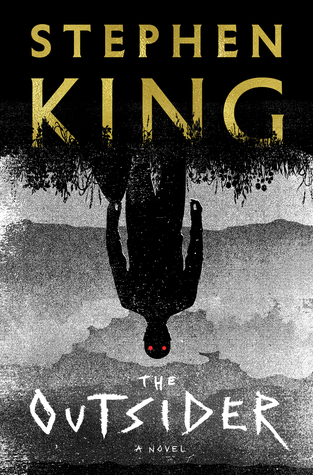
The Outsider by Stephen King
I was so prepared to be disappointed. I mean, King did write himself into the Dark Tower series. (not a spoiler, it's been out for YEARS). But I was very pleasantly surprised and even, dare I say, excited about this jacked up trip King took me on.
This starts out depressing and grisly when a little boy's mutilated corpse is found. It seems like a slam-dunk case, with eye witnesses stepping forward and letting Ralph Anderson, Flint City PD, know that Coach T, Terry Maitland, was with the victim right before the victim disappeared. It seems like everyone in town saw Terry, either with the kid or covered in blood. At this point, I already start saying to myself that this is TOO slam dunk. How could the guy be this dumb?
Ralph and co arrest Terry in the most spectacular way, causing the whole town to come down on Coach T (what happened to innocent until proven guilty??). Things turn mobbishly ugly and lives are lost. Problem? There's proof Terry was in Cap City with other teachers. Actual proof of Terry both on the corpse and in an entirely other city.
How can someone be in two places at the same time?
The answer to that is: Sister, you are in King's world now. The answer is horribly disturbing and crazy. There is an appearance by someone I know and love and, since I was so surprised by it, I won't tell you :) But truly, the appearance made this book for me.
The ending was strangely satisfying. I'm very happy to say this is a great King book that is really worth reading.
This starts out depressing and grisly when a little boy's mutilated corpse is found. It seems like a slam-dunk case, with eye witnesses stepping forward and letting Ralph Anderson, Flint City PD, know that Coach T, Terry Maitland, was with the victim right before the victim disappeared. It seems like everyone in town saw Terry, either with the kid or covered in blood. At this point, I already start saying to myself that this is TOO slam dunk. How could the guy be this dumb?
Ralph and co arrest Terry in the most spectacular way, causing the whole town to come down on Coach T (what happened to innocent until proven guilty??). Things turn mobbishly ugly and lives are lost. Problem? There's proof Terry was in Cap City with other teachers. Actual proof of Terry both on the corpse and in an entirely other city.
How can someone be in two places at the same time?
The answer to that is: Sister, you are in King's world now. The answer is horribly disturbing and crazy. There is an appearance by someone I know and love and, since I was so surprised by it, I won't tell you :) But truly, the appearance made this book for me.
The ending was strangely satisfying. I'm very happy to say this is a great King book that is really worth reading.
Subscribe to:
Posts (Atom)