Don't you love when a book comes out of nowhere and it turns into one you just can't put down? I hadn't heard of Blacktop Wasteland by S.A. Cosby before I got it through a book club. It was a wild ride!
I knew I liked (some) heist movies, but I don't think I've read many heist books. Blacktop Wasteland is a heist book, full of cars and action, twists and turns. Beauregard "Bug" Montage used to live a life that was bound to kill him. He was one of the best getaway drivers on the East Coast, but once he married Kia and had 2 kids (with one from a previous relationship), he turned straight: an honest mechanic, doing well with his own garage.
But times hit hard. A new, cheaper auto garage came in nearby, wiping out his clientele and causing him to fall behind on payments. Not to mention kids needing braces and glasses. His cousin Kelvin finds him a street race, in hopes of making some money. Bug's Duster is a thing of beauty - not much to look at, but beautiful where it counts. He wins but it's still not enough money to help his troubles.
We get background on Bug's childhood. Absent father, mom who takes her anger out on her son. The background on Ant, Bug's dad, helps us see how Bug's new decisions are pushing him right down the same path. Bug needs a "job" and ol' white trash Ronnie is there with a doozy. Against everything Bug SHOULD be doing, he takes it and plans out the robbery. All would have been well, Bug is smart and knows his shit. Except....
Everything starts hitting the fan in crazy ways that take the book from just a robbery to a full on heist and possibly redemption. It's another book that is worth your time on the ride, even if it means a book hangover in the morning. You really have it all: fully fleshed out characters that you are invested in, a plot that doesn't stay in a straight line, and a world that you can be immersed in, taking the hits with the characters.
I don't say this often, but I really hope this becomes a movie.
I thought joining a new book club online would be fun. Anything to expand my reading and get me social, right? Plum Deluxe tea has a Facebook group for it's book club and the list for the year sounded pretty good. Each month is a live Zoom to talk about the book.
If I had paid attention I would have seen that the live talk was on my virtual Knit and Bitch night. D'oh! I'm pretty sure the folks in my KnB group will be ok moving it one night a month :)
This month's book was Vanessa Yu's Magical Paris Tea Shop by Roselle Lim. I found it on Amazon Kindle for $3.99 and got it read in time. All of those are magical things. The book? Well, it was a bit more fluffy than I would normally ever read. A bit more chick lit (I actually don't know if it is chick lit, but it feels like it).
Vanessa is a Chinese-American living on the West Coast and she has always had the ability to tell fortunes for people when looking at tea leaves. Apparently, this gift runs in the family and her Aunt Evelyn tries to teach her the rules and ways of fortune telling but Vanessa is stubborn and won't listen. So she endures horrible headaches with her fortune telling, while desperately wishing for love and to be free of this gift.
Her family, mom and aunties in particular, spend money to bring in a renowned matchmaker from China for poor Vanessa. I guess not being wed is a terrible sin? The matchmaker doesn't see a soulmate for Vanessa. After a last, particularly painful and devastating fortune, is blurted out, Vanessa decides she wants Evelyn to teach her the ways of fortune tellers.
That involves going to Paris for months and working in her aunt's tea shop. Oh, the humanity.
The descriptions of Paris and the food were actually really well done and made me jealous. We're relentlessly hit over the head that Vanessa is a "foodie" and she's desperate for love. It just soaks into every part of the story. Vanessa is a bit childish but, per chick lit rules, she has an encounter that forces her to grow up and take charge of herself. There were some odd twists at the end that seem to resolve the mystical gift issue, but honestly, it left me with questions.
Is this a normal thing in this book's world? If I went to a tea shop and some woman told me my dad was going to die and described how, I wouldn't be ok with that. It would be hard to just "shrug off" and I would wonder what the hell was going on. But in this world, it seems like a normal thing. You want to try a new tea sample? Here's how your dad is going to die. Okey dokey. (I know this is magical realism, but... ok, my head couldn't wrap around this :) )
If chick lit and romance-y type books are your jam, I imagine you'll like this. I enjoyed the tea, food, and Paris backdrop and was just happy with that!
When I got Their Eyes Were Watching God by Zora Neale Hurston for a book club, I was fairly sure that I had read it before. Goodreads showed that I read it in 2005. I couldn't for the life of me remember it so I went ahead and downloaded the audiobook from Audible to listen to while I finished knitting gifts.
Almost immediately into the book, I started remembering it. When Tea Cake was mentioned, nearly all of it came back to me (I'm not sure why Tea Cake triggered my memories). There were so many moments in this novel where I just sat down whatever I was doing to listen. The narrator, Ruby Dee, is phenomenal. The writing by Zora Neale Hurston was phenomenal. The story is so well done, I was invested at every step with Janie.
I'm delighted that Ruby Dee's version of the audio book is out on YouTube where you can listen for free. It's less than 7 hours and a billion percent worth taking your time to listen.
There is also a movie with Halle Berry but I can't find a good trailer or the movie to share.
The novel starts off with Janie Crawford walking back, barefoot and in overalls, to her home in Eatonville, Florida. Her neighbors are sitting on a porch chatting when they spy her walking up the road. We know nothing about Janie yet, but we know she is a source of gossip among the towns people. Janie gets back to her big house and opens it up to air out. Her best friend, Pheoby, comes by with food for her. That's when we realize that Janie has been gone a while. Her leaving with a "younger man" and being away for years has made her more of a source of gossip than her previous life in Eatonville.
Thankfully, Janie sits and tells Pheoby her story. We learn she was raised by her grandma, who was once a slave, and her grandma married her off so she would have stability. But Janie wanted love, which she was not getting in her marriage. She happened to meet Joe Starks, who was heading to Eatonville, Florida to an all-black community to help build it up. She was taken with Joe, so she left with him.
Eatonville wasn't all they imagined. Joe had the money to help buy more land and start building it up, putting in a general store and eventually becoming Mayor. Which made Janie a prominent person in town as well, much to her dismay. Janie was a trophy wife to Joe, nothing more. She endured a lot as his wife, quite a lot of verbal and some physical abuse. My heart broke for her during this time of her life. She had been told what to do by her grandma, her first husband, and now Joe. You can feel her longing to be herself and to be the type of person who has a relationship where love is key, not money, stability or whatever other excuse people made.
Eventually, Joe does die and Janie is left with all of the inheritance, including the big, fancy house Joe built. She still works the general store but keeps to herself, until Tea Cake walks in. He has no money to his name, really, but he falls hard for Janie and she does the same. This seems to be the relationship she's always wanted.
Their time together is beautiful and painful and ends sooner than it should. Hurston takes us through all of it, edge of our seat, crying, and worried. It's a rollercoaster.
From my 2022 perspective, the domestic violence inflicted on the women in this novel is incredibly disturbing. Especially in regards to how Janie was treated by people who supposedly loved her. I'm guessing that is how things were back then but that is still hard to swallow.
Also from my 2022 perspective, how men overall treated the women was horrific, comparing them to chickens and cows. “Somebody’s got to think for the women and chillen and chickens and cows. God, they sho don't think none fo themselves.” Seriously enough to make you want to jump through the book and smack a man.
I can't recommend this classic enough. I would recommend the audio by Ruby Dee because she brought every line life and emotion.
Part of this novel was a bit autobiographical. Hurston's dad was the mayor of Eatonville for a time. Here's a short crash course on Hurston:
I plan on digging more into the Harlem Renaissance as well:
The Paris Hours by Alex George is a beautifully written novel that winds the stories of Camille, Guillaume, Souren, and Jean-Paul together in a way that not even the characters understand. Or even know. Add in Ernest Hemingway and Josephine Baker, shake it all up in 1927 in Paris and you will fall down a rabbit hole.
Each of the main characters, but not the famous ones, have their moment to give us their back story and panicked/depressing future. Camille worked for Proust and, in doing so, told him her deepest secret. She discovered later that he wrote it down to be used in his work and it's now out, loose, in the world.
Guillaume is an artist, a literal starving artist, who is struggling in Paris. Falling in with sex workers and bad guys, he must get twelve hundred francs together or lose his life.
Souren, oh Souren. His story tugged the hardest on my heart. He escaped Armenia, and ended up in Paris. His past is tortured but we really don't understand how much so until near the end of the novel. For someone with such a past, he spent his time in Paris giving amazing joy to children as a puppeteer.
Jean-Paul has another sad story but he plods on through life, collecting the stories of others instead. He does end up telling his story to Josephine Baker that ends up setting into motion a life-changing event for Jean-Paul, if only he could see it.
After the introductions, the novel takes you quickly through several days where the characters intermingle and, in some cases, impact others. But some just keep going through life, selfish, not concerned with others and not seeing their impact on their fellow human.
This really was a well written novel that makes you wonder.... as you go about your day, whose life are you affecting?
I fell off the blogging wagon. The pandemic, winter, and holidays ended up being a depressing cocktail, although I can't imagine why.
I read 45 books in 2020, a little short of normal. I blame lack of commute since I don't listen to audiobooks too much around the house. My list is here if you want to take a peek: https://www.goodreads.com/user/year_in_books/2020/21324
My first book of 2021, The Ballad of the Sad Cafe and Other Stories by Carson McCullers, is one I've read before back in 2007. I was looking for a short, familiar book to pass along to my postal book club and found this very old copy in my stacks (price 75cents). I kind of remembered the short stories and thought "This is it, this is what I'll send out into the world"
Carson McCullers is an excellent writer, there isn't one word that shouldn't be there, every word has its place. The stories are spare. Except for the title story, not much happens here. They are really just a moment in time, plucked out for your scrutiny, then you walk away into the next story. Honestly, that's where she shines.
The title story, The Ballad of the Sad Cafe, introduces us to Amelia. She owns the general store in a small mill town and is the richest woman for miles. She's shrewd, she's strong, and she likes to sue people. Add in that she is also the local medicine woman and moonshiner and well, everyone loves her even if they don't like her. Out of the blue, a hunchback appears on her step. Cousin Lymon comes to live with Amelia and, to the shock of the townspeople, she lets him. You can watch the course of Amelia falling in love with Lymon and Lymon just being a general ass to everyone. When Amelia's ex-husband comes back to town, Lymon takes a new dastardly turn.
Wunderkind is the next story that follows a gifted young pianist at her teacher's home. This story starts the slice of life view that we see. The narrator gives us some history and, while it's not explicitly said, we understand that love may have gotten in the way of genius.
The Jockey story takes place very quick but you can still feel the anguish of the jockey whose best friend was badly hurt in a race and the give-a-damn attitude of the rich men who win big from the races. The situation is still the same in 2021, the rich get richer and care less while those below are trampled on.
Madame Zilensky and the King of Finland and The Sojourner give us background into the lives of the main characters who use their interaction with others as a wake call to their own lives. The Domestic Dilemma ends on a vague note. An alcoholic unhappy wife and her husband are at odds. These things never end well, do they?
A Tree. A Rock. A Cloud is the last story and it, in essence, teaches about the science of love. See below for a video narration of the story.
This is a great little book, so well worth the read.
His proximity annoys me. But here's an interview with Carson
Rosenbloom is a librarian, a journalist, and death positive which makes her quest at finding and proving out human skin bound books all the more intriguing. Obviously, your mileage will vary with this but I didn't find it disturbing or gross, so try not to let that be a deterrent to taking this book for a spin.
In the Mütter museum in Philadelphia, there is a human skin bound book on display. This is Rosenbloom's first foray into this world. And now is a place on my bucket list to visit when the world returns to "normal".
Rosenbloom is very thorough. She takes us through the myths of these types of books, how animal skins are made into leather (honestly, enough to make me stop eating meat for a bit), how they do a quick test to see if the book is indeed human (most aren't, their lore is what makes the book valuable, not the binding), and much more.
You would think that the bulk of the human bound books would have came from the Nazi era. You would be wrong. As Rosenbloom discovers, most books of this nature are from physician libraries, which might be more disturbing. The physicians who swear an oath to help and protect patients also take skin from patients/corpses to make into books. Some of the books found actually bind the most boring of books, yet the physician felt they were the right book to bind in human skin. Back in the day, there was a disregard for patients who were disenfranchised, because of race, gender, or poverty, and physicians felt they could do what they pleased with these folks (see: The Immortal Life of Henrietta Lacks by Rebecca Skloot). Rosenbloom attended a medical school class so she could see how students of today treat the cadavers they work on and discovered there is still a bit of that clinical gaze, but there also is more emphasis on being empathic with patients and not just seeing them as things to deal with. Well, whew, I guess.
It was interesting to note that in order to donate your body to science for medical classes you must be intact, ie. nothing missing. Looks like that's not an avenue I can pursue.
There are so many interesting facts and tidbits in this book that it's well worth reading. Note that Rosenbloom is death positive and has a good view on mortality. Death isn't something to be feared and her viewpoint is infused throughout the book. A good podcast to watch on Death positivity is Ask a Mortician by Caitlin Doughty (who authors many a good book on the subject)
The author on death (potential trigger warning for photos)
A debut novel, Sweeney takes us up to Crab Island, Maine where Miranda's mother has disappeared (and presumed dead) and her dad is so caught up in his translation of Ovid's Metamorphoses that he often forgets himself and Miranda. Mr. Blackwell is a local jack of all trades fisherman who takes Miranda under his wing, including braiding her hair for her, teaching her about boats, and making sure she goes to school. Where would Miranda have ended up without Mr. Blackwell?
As she gets older, she's more awkward around people and chooses to forget to take the college exam. She has no real purpose in life and no one seems to be concerned about that. Except Mr. Blackwell. Mr. Blackwell and Miranda's dad had a fight so Mr. Blackwell has been absent from Miranda's life. But he's still looking out for her. He offers her a job with him after High School is over. When she tells her father, he suddenly gets her a job typing in NYC with two of his friends, Robert and Walter. Off she goes to New York.
Miranda is a tentative person, a bit backwards due to her upbringing, but determined to see New York. For someone so awkward, she makes friends with Ana, the coffee cart lady and Nate, teacher at the Institute with Robert and Walter. As Miranda tries to figure out who she is, who her dad was, and why she's stalled in life, her friendships take on greater meaning. Finding out who her dad really was from Robert and Walter makes her see him in a whole new light.
This was a sweet novel, and a quick read to boot. The writing is so well done, descriptive and beautiful, you'll end up re-reading passages over just to savor them.
Thanks to a book club, I've encountered this odd little book. Once I started it, I really wasn't sure it was my jam. But it really became my jam and I sped through it in one sitting.
I Felt A Funeral, In My Brain by Will Walton is both prose and poetry with Avery as our guide. It's as much dealing with grief as it is trying to figure things out, as a teen who is gay and wants to have sex with his best friend. With a mother who is an alcoholic. A grandfather, Pal, who drinks and then creates this hole that has to be filled.
Avery is trying to make sense of his grief in losing his grandpa, while dealing with everything else. And the everything else is, frankly, A LOT. We jump around between past and present, prose and poetry, lists and scattered thoughts. If you can keep up, you can go deep into the ride of Avery's thoughts and emotions.
Honestly, grief stays right below the surface. Eleven years have passed since I lost my dad and I still speak in present tense sometimes. It bubbles up out of nowhere at the most innocuous thing. Watching Avery try to work through his grief at Pal's death brought up emotions that I didn't expect to see.
This isn't your ordinary book. Dive in, but don't expect a linear path.
The title of the book is from an Emily Dickinson poem:
Before We Were Yours by Lisa Wingate was not what I expected. Honestly, every time I think I've "met" the most horrible person, the world introduces me to another much worse. C'mon world...is that necessary?
Thankfully, in this case, we're also introduced to someone on the other end of the spectrum. But the world is still cruel. In this novel, the evil, horrible person is real. The good person is not.
Rill Foss and her family, Dad Briny, Mom Queenie, and siblings live on the river in a shanty boat. It's a terrible night when Queenie is giving birth, only to discover she's having twins and something is terribly wrong. Out of desperation, Briny takes Queenie to the hospital and tells Rill to watch over the kids. He'll be back soon.
The only person coming to the boat for Rill and her siblings is Georgia Tann (click that link, woman is EVIL), and she's there to take all of the kids to an orphanage. Filling their heads with lies about seeing their parents real soon, she gets them in the car and takes them far from their home. Rill tries to keep the kids calm, with her own promises of seeing Briny and Queenie soon. But they land in a place of unspeakable horror. I know that phrase is overused, but it's true in this situation.
Kids are abused, tortured, raped, and sold to the highest bidder. And Tann profits off all of them. Rill's family is broken up, either through adoption or death, until it's just Rill and Fern.
In between Rill's story, we are in mostly present day with Avery Stafford, a wealthy lawyer who is the favorite daughter of Wells Stafford (these names, for real), an influential Southern Senator. How are they remotely related to Rill's story? Damn good question that took some time to answer.
Avery really didn't interest me, honestly, none of the Staffords did. Wealthy people who suddenly decided NOT to marry for influence and to march to their own (wealthy) drum usually bore me to tears. Avery is interesting in that she is the catalyst that pulls past and present together. We don't dive deep into the Staffords and for that, I am thankful.
Rill and her life, however, is horrifying and intriguing, made worse knowing it's based on facts.
I'm so very behind in reading the books sent to me from Nowhere Bookshop for the Fantastic Strangelings book club. Not because the books are not good, they truly are, but so are so many other books calling my name!
I signed up for the Nowhere Bookshop event where Jenny Lawson and Samantha Irby talk about Irby's new book, wow, no thank you, and just about weird things in general. It was a fun/funny event!
Irby's latest book is a series of essays so it's super simple to read one and go do dishes. Read one on your lunch then go back to work. And they are hysterical! At first, I did wonder why there was so much about poop and Irby's digestive system and I remembered before I read it, she has Crohn's Disease. I had Ulcerative Colitis, a sibling of Crohn's, and yeah, I still make a lot of poop jokes and I talk about my guts and jacked up body a lot too. I'm just not nearly as funny.
I had previously read Irby's other book We Are Never Meeting In Real Life, and again, hysterical. She brought up her first book, Meaty, in one of the essays and I feel like, yeah, I'm reading her backwards, but I'll have to read Meaty too.
While I would recommend reading all of the essays in wow, no thank you, I have to say Country Crock and A Guide to Simple Home Repairs made me laugh hard if only because I get it. Country living in a Republican state can be....different. And having your first house with all the things that can go wrong...and still go wrong... is funny when it's someone else dealing with it.
“The closer I creep toward the precipice of forty, the more time I spend listening to the same songs I listened to in high school and combing through surprisingly vivid memories of my time there, which is wild, because I did not actually have a good time being young!”
Good stuff. Perfect for, well, right about now! Get a copy!
I've been following the DrunkKnitter on Instagram for a bit because she's local-ish and a great knit designer. When the protests started happening against police brutality and BLM became a top news story, she started a #MKALBookClub (you can search Instagram for the hashtag). We would be reading a book and she was giving out a free mystery pattern to knit at the same time.
The book was The Bluest Eye by Toni Morrison. The pattern is Pecola.
I had The Bluest Eye in my bookcase but I had not yet read it. Once I picked it up, printed the pattern and casted on....well, the knitting went by the wayside until I got the book finished. This is Morrison's debut novel and her writing from the start is just lyrical. I kept going back to re-read passages, initially because they were beautiful, then again because they were so impactful.
We're in 1941 and Pecola, a young black girl, yearns to have blue eyes. It's one of her greatest wishes. Pecola is constantly told that she is ugly. Her family is ugly and everyone just accepts that this is true. Pecola is sure that if she had blue eyes, she couldn't be ugly anymore. The novel is mostly narrated by Claudia, another young black girl, with whom Pecola has to stay with when Pecola's father sets their own house on fire.
Claudia firmly believes she is beautiful. She, and so many others, use Pecola's ugliness as a way to make themselves feel better. But I think Claudia is only person to acknowledge that in the novel. Pecola's father is an alcoholic, abusive man. Her mother shows more care and affection to the white children she cares for than her own kids. Her brother has ran away too many times to count, never taking Pecola with him. Eventually, Cholly, Pecola's father, rapes her. She ends up pregnant when she is still just a child herself.
Pecola eventually gets her blue eyes....in her mind. She descends into a mental breakdown and the final chapters put us in her head as she spirals downward.
The abuse Pecola endures, not just from her family, but from her community, is almost unbearable to read about. When Pecola wishes for blue eyes, it's to achieve the beauty of "whiteness" as if only white people can be beautiful. When I started unpacking that, I honestly didn't know what to do with it. I listened to interviews by Morrison about this novel and discovered it's the same today. Whiteness is held up as a standard a beauty, even for black people, and that makes zero sense to me. I know that beauty is supposed to be a virtue in our society. You must be attractive, you must be beautiful, to be somebody, anybody. That is now, and always was, an incredibly damaging virtue to strive for. But it's even more damaging to tell black folks that they must strive to look as white as possible to be considered beautiful.
The world is unyielding (Morrison's words) to black girls. In this novel, you feel like Pecola doesn't stand a chance, that everyone sees her drowning and no one steps in to help. Claudia and her sister seem to be the only ones who are rooting for Pecola and her baby. Everyone else takes a step back.
This was an eye opening novel. Morrison has been on my list of favorite authors since I read Beloved so I'm glad the Drunk Knitter started her book club to get us reading.
And I finally got back to the knitting and it's working up so beautifully!
I like Toni's answer. Why would she be asked this when I would bet money that white authors are not asked the same question?
Not really. Video games of any kind have never really snagged my interest, for the same reason TV and movies haven't either. I prefer reading. When faced with downtime (prior to COVID-19, that was rare. Now, I have so much down time....), I would always grab a book, newspaper, or magazine and sit down and read.
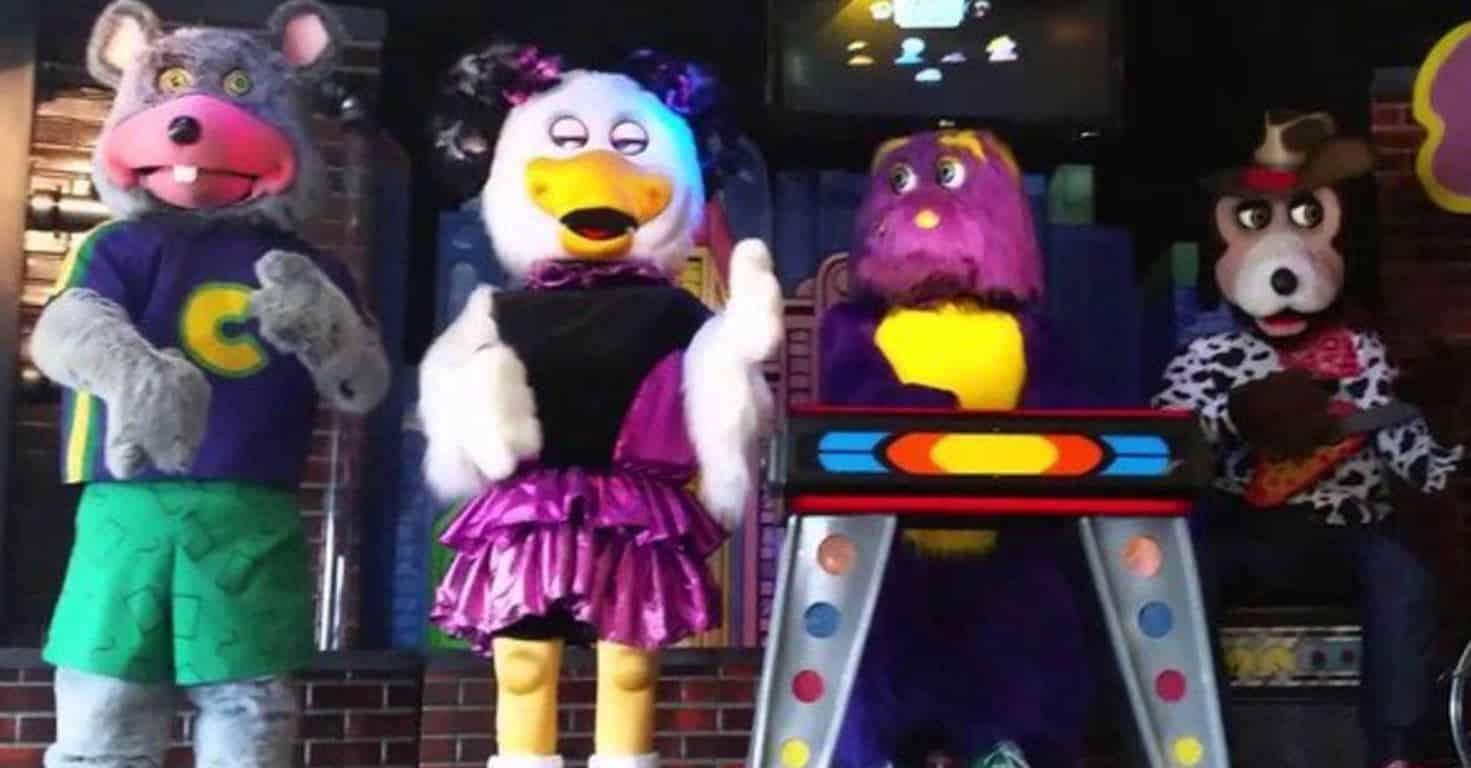
Five Nights at Freddy'sThe Silver Eyes by Scott Cawthorn and Kira Breed-Wrisley has made me vow to never play video games. I got this book from a friend and it really kept my attention but also really made me remember how much I hated the Showbiz Pizza animatronic band (really, any giant person-in-an-animal-suit ~ looking at you Chuck E. Cheese). Those creeped me out so much and this book is full of them. Except, in this case, they are killers too.
6 minutes of creepy
A group of kids return to Hurricane, UT to attend a memorial for one of their classmates, Michael. Michael was snatched and presumed killed when the kids were 7 years old and, 10 years later, Michael's parents are setting up an award in his name. Charlie, whose father owned the pizzeria where Michael disappeared, is struggling more so than the others. Her father killed himself (in a rather weird way) and her visit to their old house brings back memories that she had forgotten.
As Charlie starts remembering her past, well, things get stranger than you thought they could.
Charlie and her group of friends go searching for Freddy Fazbear's Pizza for kicks but in up getting much more than some shits and giggles. This book goes all out creepy and somewhat gory, but seems suitable for hardier kids. I might be overstating it because I have no idea what the video game is like, but if you like creep and jump scares, you'll like this. All in all, we do not have many murders so the gore-level is low while the creep factor is high.
I read Follow Me To Ground by Sue Rainsford a bit ago but I didn't know what to say about it because I had no idea what I had just read. I still don't, really, but I'm going to blather on about it anyways.
This was the first book in Jenny Lawson's Fantastic Strangelings Book Club. Of course, I signed up to get the books because 1) I love Jenny and 2) I knew her taste in books would be all over the place and awesome.
The cool part about the book club is....this book is signed by Sue. :)
I have to talk about this book now, in a way that makes you want to go read it. I know this is going to sound all weird and gibberish, so just go read it.
Follow Me To Ground is a debut novel that is on the edge of fantasy (but it's not really) and folklore (but no, not that) and literary fiction. Ada and her father can cure illnesses. They live on the edge of a village and locals - "Cures" - make appointments to come to them to get cured of whatever ails them. Nearly every ailment is curable, but there are some that are too far gone so Ada and her father do their best to give the person more time and comfort.
They cure by literally cracking open the person's body and removing the sickness. The patient is thankfully asleep because, in order to help fix the patient, Ada and her father bury the patient, alive, in the Ground. The patient is dug up after an appropriate interval and sent home, healthier than when they arrived.
Clearly, Ada and her father are not human, but Ada wants to be more than what she is. The villagers ignore Ada unless they are sick, then the happily interact with Ada and her father. Ada helps cure Samson and ends up taking him as her lover. Olivia, Samson's sister, is pregnant and comes for cures often because of pregnancy issues. Ada's father wants her to stop seeing Samson because, well, he's human and it's going to cause problems for them. Oh, little does he know.
This novel ends in the most intriguing, confusing, eye-opening, OMG way. I was thinking about this for DAYS afterwards trying to maneuver my mind around everything that happened. I plan to re-read it soon to see if I could have picked up on more clues, if they even exist. The author writes in an interesting way and I'm not sure she knows what happened (The author answers questions in the FB group - go take a look).
This was an interesting premise. Maddy, a seemingly perfect mom/housewife, jumps to her death off of a building and everyone is left to wonder why. Maddy herself is in another realm watching over her husband and teenage daughter, trying to make life better for them now that she is gone.
This could have easily went south and dark but it actually didn't. I admit to being irritated with Maddy. "Why are you playing God with your family now when you chose to leave them?" That thought kept playing in my head as Maddy manipulated feelings and situations to get the outcome she wanted.
Her husband, Brady......I'm shocked anyone stayed married to him, to be honest. Eve, her 17 year old daughter, was a typical selfish teenager. But Eve was the one who really reflected and worked on understanding her mom's suicide. Eve's transformation was partially sad and partially amazing. Brady stays an ass for a while :)
I felt the ending was a bit forced but I'll leave that for you to discover and make your own opinions on! Overall though, this was a really good book that made me reflect on how I treat my loved ones and what I would need to change to make people feel appreciated while they are still here.
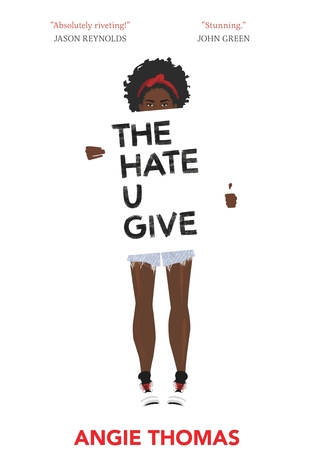
I was blown away by this book. My IRL book club picked it for our first book of 2019 and, frankly, I'm surprised at the choice. I listened to the audio book and was 100% in it with Starr. Probably through my own ignorance at what is out there, I've never read a book that was this heartbreaking and made me view things in a different light.
Starr Carter is a 16 year old African American living in Garden Heights (the hood). She's met up with her old friend Khalil at a party and, when gunshots ring out, he gets Starr out of there and into his car to take home. Khalil and Starr have know each other since they were babies. Khalil is a good kid but there are rumors that he's been selling drugs. On the way home, Khalil is pulled over by the police for a broken taillight. If you've paid a bit of attention to the news, you know what happens. I was still upset when it happened. Due to "circumstances" (white prejudice), Khalil is shot in the back 3 times. He's unarmed, there are no weapons in the car, but a 16 year old kid is laying on the street dying from being shot repeatedly in the back by a cop. Starr has the gun turned on her as well, until the cop's backup arrives.
The journey from that night to the end, riots in Garden Heights, is Starr's story of how she has dealt and is dealing with seeing two of her best friends murdered. Natasha, her other friend, was killed in a driveby when she was 10. Now Khalil at 16 is murdered. My heart broke a thousand times over for Starr and for everyone in her neighborhood.
This is such a worthwhile read and, actually, so important to read and understand that what you read in the news or see on TV isn't the real story. People get into situations they can't get out of, but that doesn't make them bad or make them deserve to be murdered.
We've landed in the 30's and 40's, in Canada, in Chinatown. Not exactly a place I thought I would be! This was a timely book about immigration and it allowed us to hear how it was to be a Chinese immigrant in Canada from the perspective of 3 children.
Gender and birth order play a huge role in Chinese culture. It's unfortunate because the first POV we experience is Jook-Liang, only sister. Being female and not being the oldest in the family puts her in a position of, well, I'd like to say invisibility but she's visible and constantly being told by her grandma that girls are worthless. No one wants girls. Jook-Liang is nothing if not persistent, even becoming best friends with an old Chinese man, Wong Bak. You notice that in this POV Chinese culture is very prevalent.
Our next voice is Jung-Sum, Second Brother. Still not a place of austerity but certainly better than being a girl. Jung is adopted and he's taken with boxing, getting lessons and learning how to shadow box. As you're reading, you notice he has a need to be "manly", with boxing, fighting, and how he dresses. As you walk through Jung's POV with him, you discover his secret.
Our last POV is the youngest brother Sek-Lung, a sickly little kid that was constantly kept out of school and was a favorite of the grandma. His POV is distinctly void of Chinese culture and he's very clearly a spoiled kid. Probably the least favorite of the sections because it didn't feel like it had a point (you'll notice the other two did). Sek-Lung takes in all the disinformation about the Japanese, including with Pearl Harbor that forced America into the war, and he joins in bullying Japanese children, even while admitting that he was mistaken for being Japanese and had to be protected. Well, perhaps that is the point?
This was a good book with great perspective on, essentially, being a stranger in a strange land....illegally.
I had expectations going in solely from the title and cover (isn't there wisdom about not judging a book by...something?). The NYC art scene in the '80s sounded intriguing and interesting to me. Prentiss' writing was unexpected but not unliked. I got into that groove fairly quickly. I dove in with her, into Franca's life in Argentina, and was a bit unhappy to be pulled out so quick. Ah, it's ok, I'll find out more later.
Here's my issue with the book.
We touch on some very interesting characters, but only three are actually examined, and, in my mind, the three that we delve into are not the interesting ones. We lost the ones that held my interest and barely touched into another one that was filled with promise.
We lost Franca but gained her brother Raul. There wasn't anything redeeming in his character that made me care for him, nor made me sorry when he had an accident. We have Lucy, who, initially, I was excited to follow. A small town girl from the Midwest heads to NYC for a new, exciting life. Typical but I was hoping her path was atypical. Wrong again! She went the route of sexed-up, secondary character pretty quickly. Then there's James, who has synaesthesia and is an art critic. How he saw life and art was new and exciting and made him the top of the heap in the art world. Alas, his dear wife Marge was relegated to a bit player. I couldn't like James simply for the fact that, as Marge worked full time in an office and not doing her art, James spent every penny he got....not on rent, or food, or anything useful, but on art. And he saw nothing wrong with forcing his wife to work a dull job to keep a roof over their head while he puttered around the art scene.
I'm used to books where every character is nonredeemable (The Great Gatsby, anyone?) but the writing itself usually makes it all worthwhile. The writing here is good, don't get me wrong, but I wanted something else from the characters.
An interesting read that I don't think I would have picked up on my own. I'm going to get my pet peeve about this one out of the way immediately and I shall not dwell on it anymore: no contractions. When I see entire soliloquies without contractions, my brain dies a little. It feels entirely too formal. Of course there were some, but the monologues were overwhelmingly formal. Also, "Good morning, how did you sleep?" is not a question that invites monologues, but in this book, that's what you get.
Away from the peeves!
Emma and Maria are two sisters who have lost contact with each other. Maria lives outside Barcelona and, on impulse even she can't understand, invites Emma to stay with her for a visit while they are cleaning up at their mother's funeral. Emma seemingly ignores the request until two years later when she emails Maria that she is coming for that visit. Maria is instantly upset and angry at Emma (and, rightfully, at herself) but prepares for the visit anyways. Clearly, these two sisters have, not just issues, but subscriptions worth of problems.
The book unfolds with many monologues and pouring forth of sisterly tears as they finally, actually, talk to one another. We have one sister, Emma, who stayed near home and became the caregiver to a Mother that the other sister could not stand. Maria, after the death of her twin Amanda, went off and never came back. Neither of those situations are ideal and they naturally created a rift between the two. The rift started when Emma was born and "invaded" the twins space and just grew larger and larger.
Ignoring my peeves, the way this story unfolded was interesting. Little bits and bops of things kept popping up and disappearing and made me (the reader) anxious. "We need to talk about Amanda" was said enough times that I yelled at the book "TALK ABOUT AMANDA". The book ignored me and continued on until it was damn well ready to talk about Amanda. And what a talk it was.
Interesting little book. Definitely worth a read. I'm sure I'm a rare reader when it comes to the contractions and formal language deal, so I'm sure you will do just fine.
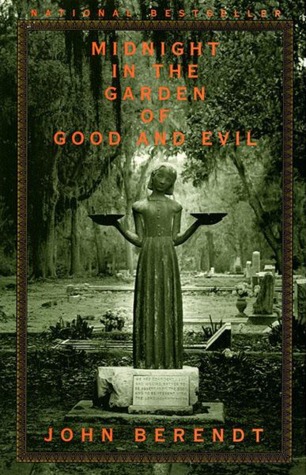
This was a IRL book club pick, something I had heard of but was pretty sure I had no interest in reading. Oh dear, there are problems with high society people in Savannah? Let me rush right into that.
Well, now I want to visit Savannah. (Damn you, well written and delightful book!)
This really is non-fiction that you can't quite believe really happened. Are people really like this? I know there are eccentrics in the good ol' USA but to have that many living in Savannah is really quite astounding.
We're told of the saga of Jim Williams, rich, gay, eccentric, and simultaneously beloved and loathed by society. Oh, they will come to his mansion and to his parties but they will talk about him behind his back because he didn't rise up through the proper family ranks. In a nutshell, a very small nutshell, he kills the 21 year old who works for him in self-defense. Except no one really believes it and he ends up having FOUR trials to determine if he's guilty.
Add in a lawyer/conman, a transgender drag queen named Chablis, a voodoo queen and a bug guy willing to poison the water of Savannah and I'm not sure what exactly you get. You definitely get a great book to lose yourself in and I'm sure you'll get a road trip to Savannah because you want to see if people are really like this.
I normally really like short stories, when I'm ready for short stories. Usually after an epic novel that weighs more than my car. At that time, carrying around a slim volume of short stories, and reading in chunks, is a delight (and my arms get a rest!).
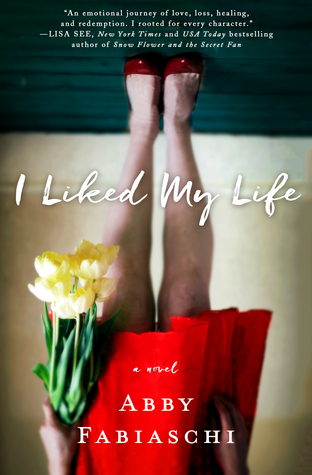
I dove into into volume and immediately was unsure if I wanted to continue. The writing was good, the perspective was great, the voice changed with each story and it was interesting. So, what's your problem, Amanda?? I couldn't relate. Every story was wife/mother/husband/kids. As a never-married, no-children woman, I had no one to side with or to understand. I was left thinking, "Do women really get that resentful in their marriage? With their children?"
THEN I got it. Some of it. Being a woman is a complicated way to live. I somewhat feel for men trying to understand us when, frankly, we can confuse and perplex ourselves. I am the woman in the dentist chair running a billion worries through her mind, all in the span of one visit. My worries may not include husbands or kids, but they are worries. Going alone into this world is just as difficult sometimes.
I get resentful of people in my life, for reasons I've actually never understood. The feeling goes away pretty quick but it happens. Relationships are complicated, friendships are hard, testing the waters to try something completely new to you is just terrifying at times.
I do think a woman who is/was a wife/mother would get a bit more from this than I did but I appreciated the writing and am curious to check out more of Rechner's work.