Sunday, August 14, 2016

Grunt by Mary Roach

Or Grunt: The Curious Science of Humans at War

I've never met a bad Mary Roach book and this was no exception. War books, war movies, none of those are my "thing" but since this is Roach I figured it would be funny and informative and not so much with the horrors of war....all that was true, until the last chapter.

I listened to this in audiobook format so I can't go back and get chapter titles and this all has to come from memory (I should really write things down when I listen to audiobooks) but essentially Roach delves into the science of soldiers at war. But she takes the approach that others don't normally take such as: Is diarrhea a threat to national security? Turns out, yes. It's a huge problem for soldiers in other countries and it's actually not something I would have even thought about. There are departments dedicated to research of diarrhea just to help keep the soldiers healthy.

Roach researched hearing loss - another big problem with soldiers as well as uniforms and how to protect soldiers from IEDs that explode under vehicles. Again, it turns out that those injuries are unique and that lead to Roach researching penis reconstruction and how surgeons at Walter Reed hospital are doing everything they can to put soldiers back together. An interesting and sad side note, when Roach asked about women and their reproductive organs during IED explosions, it was pointed out that if the damage reached the ovaries, then the soldier was dead.

We delved into flies and research on maggot debridement as well as heat exertion and life on a submarine (think severe sleep deprivation). All of the chapters had Roach's trademark wry humor ("Brian Williams loved caffeinated meat.....or did he?"). The last chapter was somber and serious. Roach went to a morgue where soldiers are taken in order to meet with physicians who are doing their best to understand how the deaths happened and what can be learned to prevent future deaths. Something as simple as a tourniquet not being placed right is a difference between life or death and medics in the field are constantly briefed on what went right and what went wrong. Roach was clearly taken with the images of dead soldiers and, honestly, that chapter was hardest to listen to.

I hate war, I hate the thought that all of this is needed because we have to be at war. I hate what the men and women of the military have to endure to do their job. But I'm very happy they are brave enough to do it and I thank them for that.


Two good interviews with Mary Roach can be found:

http://sciencesortof.com/show-notes/2016/6/episode-244-a-grunts-life

http://www.maximumfun.org/sawbones/sawbones-mary-roach


Saturday, July 2, 2016

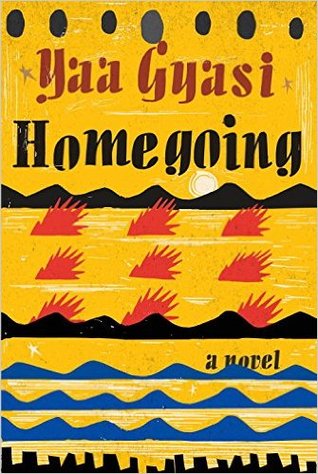
Homegoing by Yaa Gyasi

Some books put in family trees of their characters, which I mostly ignore, but for Homegoing, I referred back to it repeatedly. Not because it was confusing, but because I wanted to keep making sure lineages carried on. Let me explain why.


First let me say that for a debut novel, this was wonderful. This author is going to shine bright so keep an eye on her. Homegoing tells the story of 2 half sisters, Effia and Esi, who know nothing of each other but share the same mother. Maame is at the top of the tree. We start off in 18th-century Ghana and, in each chapter, we follow one person on the family tree. Effia is known as Effia the Beauty in her village. She is married off to an Englishman and lives in a Castle. Esi is kidnapped from her village and sold into slavery. Slaves were kept in the dungeon of the Castle while they waited for ships to take them to America. Effia and Esi are literally separated by a floor. 

As we move through the chapters, we branch out to follow Effia's lineage in Africa and Esi's lineage in America. We end in modern times, 8 generations from where we started. 

This is a heartbreaking, heavy book. When we hear now of black reparations, most people just scoff that slavery ended and the current generation of African Americans are not affected anymore. Reading this novel can change minds. When slaves were freed and black people had to carry "free papers" everywhere they went, when, even with free papers, they were thrown in jail and sentenced to 9 years of hard labor because they didn't cross a street when a white person walked by, when mothers were kidnapped off the street in Baltimore and taken South to be sold into slavery even though she was born free up North....all of these are heartrending to read. 

Each chapter closes the door on the person we are discovering which is why I kept going back to the family tree to see if that person made it out and continued on. We learn bits and pieces in the next chapters through the eyes of the children to see how the parents faired. It's truly an interesting way to introduce everyone to us and to show how slavery affected one family, multiple generations in.

Must read, you guys, you must read.


Wednesday, June 22, 2016

End Of Watch by Stephen King

Ah, Mr. King. You just kill me.

We're at the end of the Bill Hodges trilogy and what an end it was. I'm not going to spoil anything for anyone because this ride is worth taking your time on and enjoying.

We started off with Mr. Mercedes and Brady as the Mercedes Killer. This was a typical "humans are so evil I don't need the supernatural to help" type of King novel. Next up was Finders Keepers with started off in the same vain but ended making us believe the supernatural was about to enter and give evil a hand.

We know from Finders Keepers that Brady woke up from his coma with brain damage and wasn't deemed competent enough to stand trial. We also know that Hodges suspected (correctly!) that Brady was faking it and that he somehow ended up with a bit o'telekinesis.

Oh but that's not all Brady brought back with him.

Hodges, Holly and a bit of Jerome are back together and doing their best to suspend belief, accept the supernatural and impossible and bring down "the suicide prince".

I listened to this from Audible.com and was terribly sad to have to sleep, go to work... really to have a life aside from listening to this book. I admit to tearing up at the end. King made this a final book in the most permanent way.

Bravo!


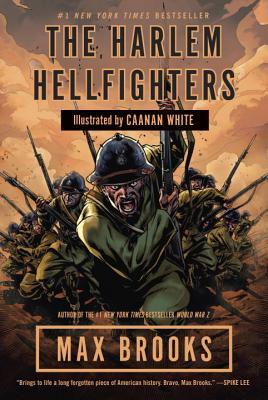
The Harlem Hellfighters by Max Brooks

Max Brooks is well known for World War Z but this was the first I knew of a graphic novel by Brooks (and Cannan White as the illustrator). The premise was so interesting that I put this on my to-read list on Goodreads and was ecstatic to find it at my (little) local library.

The Harlem Hellfighters (as nicknamed by the Germans) were an regiment of black men who willingly enlisted in the Army during WWI when America finally decided to step into battle. The 369th infantry started off brave, stayed brave when white soldiers and civilians were killing them, when their own army was refusing to give them weapons or training, when they were finally sent over seas to fight and fight hard. They were not given a parade when they were sent out, but the white men were. So much of this novel is brutal but it's not the war portion that is heartbreaking. It's the racist acts by others that make me angry. If you enlist, you are brave and you are deserving of respect, regardless of your color or sex or anything.

This is a fictional account of a real regiment. Some of the characters are real people and at the end Brooks explains who people are. This is a terribly interesting portion of American history that I have never even heard of and now I want to know more!

In the end, they got their parade (along with many years of violent racism) and ended up being one of the most decorated regiments in the army.  Take a look at this and then go find out more about this awesome history.


The quote in this video that sums things up: "Had he been white, he would have walked out of that war with a Medal of Honor"


Sunday, June 19, 2016

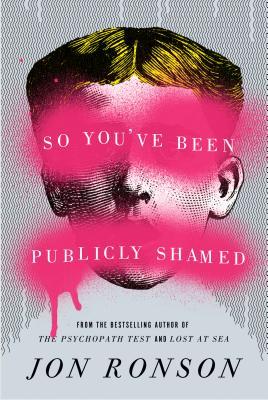
So You've Been Publicly Shamed by Jon Ronson

I enjoy Ronson's writing style and his interviews. He interviewed on The Daily Show about this book and I immediately put it in my to-read list on Goodreads (over 1,000 books strong).

The internet is a hotbed of trolls who live for the anonymity of the world wide web so they can ruin lives on a lark. I've not participated in shamings online because they are stupid. After finishing this book, I'm more adamant that the people who set out to destroy other people for minor transgressions need to get a damn life. You want to shame Charles Manson? Go for it. But destroying someone who made an ill-timed or inappropriate joke? Ruining their life? Getting them fired? Pretending you are superior as you destroy them? Get a damn life.


http://www.cc.com/shows/the-daily-show-with-jon-stewart/interviews/6aiq3n/exclusive-jon-ronson-extended-interview


Ronson has admitted that he has participated in shaming although, after writing the book, he does not engaged in shamings (as much). He interviews, over the course of many months, folks who have been publicly shamed and, in some cases, tries to help them repair some of the damage. I've only heard of one person, Justine Sacco, who made a (terrible) joke about AIDs and being white. That one showed up on my Facebook feed pretty often as it was happening. I remember reading the joke and just thinking "That was in bad taste" and moving on. But she was eviscerated online with some Twit(ter) even showing up at the airport to get a picture of her as she got off the plane and discovered what had happened.

The others in the book are authors who lied/plagiarized, a girl who posed for an inappropriate photo at Arlington Cemetery, and a guy at a tech conference who made a geek joke that was taken as sexually inappropriate by a female IT worker. That one got me. It's difficult being female in IT, sure, but she went guerrilla on this guy for a joke that I honestly would have laughed at. While he was fired from his job for this, she took a beating on the internet as well.

All in all, the internet is insanity. The worst of the worst come out to play and apparently don't realize, or they don't care, that people are human and humans make mistakes. One mistake, one bad joke, one tiny thing shouldn't destroy a person. But thanks to the internet and its trolls, it does.


Wednesday, June 1, 2016

A Tale of Two Cities by Charles Dickens

It was the best of times, it was the worst of times.

I think everyone knows this phrase even if they've never read the book. I certainly did. Once again, Heather Ordover from the Craftlit podcast caused me to read a classic that I wasn't sure I wanted to attempt. She fully encouraged me through the "slow" pieces for the final payoff. A Tale of Two Cities is easily one of my top 5 favorite classics now.

If I wanted to boil this down: French aristocracy stomps on the peasants. Peasants revolt. People die. Someone knits through the whole thing.

That's almost insulting to this novel. I actually learned quite a bit, not just about history but about writing. There is a reason Dickens is renowned for his work.

We have 3 books: the first book introduces us to the main players. Jarvis Lorry, a man of business who I just want to hug and adjust his wig. Lucie Manette, perhaps too perfect and dull a character but very necessary for the book. Alexandre Manette, Lucie's dad who was imprisoned in the Bastille for 18 years. We do find out why he was imprisoned and the anger starts all over again. Sydney Carton, he starts off as cynical and probably alcoholic but follow him. Charles Darney, another somewhat dull but necessary character. The Crunchers, The DeFarges, The Jacques...etc. We meet them all, in London and in Paris.

Book 2 moves the chess pieces into place and gets the characters where they need to be. Here, I learned about 3 act plays and how we don't really have them anymore. People want the introduction and then the final payoff. Dickens makes us go through the moving of the pieces and he does it wonderfully.

Book 3 throws us, and the characters, into Paris and just horribleness.  Reading up on the French Revolution, it was really that disturbing and sick. The peasants created an uprising, which since the aristocracy was pretty awful, I don't blame them, BUT they went so far with the guillotine and trying to wipe out entire lineages of aristocracy that it was a bloodbath. Dickens spares nothing when describing the violence and the blood. Our beloved characters get caught up in this revolution, for better or worse. When the ending comes,  your heart will rend (and you will probably tear up - I did).

I also learned about allegorical characters. I never considered that The Vengeance might not be a real woman but it makes sense that she is "Plump with a starving grocer husband" if she is truly the vengeance of the peasants feeding off of their hate. She is well fed, indeed, during the revolution.

I'll admit to being very curious about Madame DeFarge because I knew she was famously always knitting in this novel. Heather even has a knitting book called What Would Madame DeFarge Knit? and that really prompted me to read this. Knitters shouldn't be evil, they just shouldn't. When we knit, we put good thoughts, prayers and positive vibes into our work. Not DeFarge. Her character was very interesting and turned into something very frightening.

Don't be afraid of this book. Tackle it. Read it. Learn from it. It's so very worth your time. This is out of copyright so it's free on the interwebz at Librivox or Project Gutenberg.

“It is a far, far better thing that I do, than I have ever done; it is a far, far better rest that I go to than I have ever known.” 

Monday, May 30, 2016

Nine Stories by JD Salinger

This was an interesting little book of stories. I enjoyed them all and went out on the Interwebz to read a little more about them. Salinger, obviously, is a great writer and short stories are some of the hardest to tackle, I think, because you have to capture the audience quickly and leave them satisfied with the story in just a few pages.

A Perfect Day for Bananafish is the opening story and, at first, seems very frivolous and materialistic. Nearly all stories in this book touch on war and it's aftermath. We have a daughter and mother discussing fashion while the mother expresses worry about her son-in-law's "funny" behavior. The story ends in such violence that I needed to go back and re-read, sure I had missed something.

Uncle Wiggily in Connecticut and Just Before The War With The Eskimos feel connected in a way. Uncle Wiggily shows us a housewife who is realizing her own unhappiness in her life and marriage and is drowning it in alcohol. Just Before The War... show us children starting off making connections with others and realizing there could be happiness. Some of the internet notes say that the latter story is a symbolism of Christ. I didn't see that and don't know if that was the intention.

The Laughing Man and Down at the Dinghy were good stories: the former depicting the end of youth and told from the POV of a man looking at the past. The latter gave us a little boy who frequently runs away to avoid conflict and his mother, whom I was pretty impressed with, connecting back with him to get his confidence to come home.

For Esme - With Love and Squalor was a bit brutal with the wartime references. We start off with a young solider meeting Esme, a little girl, who wants to write to him. We abruptly move into a room with Sargent X, a war harden solider, who has suffered a nervous breakdown.  I really liked this story. I think, even now, we romanticize war much more than we should and "forget" the reality that the soldiers have to face.

Pretty Mouth and Green My Eyes is a phone conversation with a, to me, ambiguous ending. Why did Arthur lie?

The last two, I liked very much: De Daumier-Smith's Blue Period and Teddy. John Smith, in the former story, is a narcissistic, arrogant young man who eventually has some revelations that lead him in a better direction. Religion is heavy in this one as Smith tries to communicate with a nun whose art he is tasked with evaluating.  The latter, Teddy, brings us to a close with a very ambiguous ending and quite a bit of Zen and reincarnation as presented by a child. Ten year old Teddy is a mystic prodigy and has several conversations aboard a luxury liner that show his depth of knowledge (he is not an "apple eater"). The ending, where we've been prompted to believe in Teddy's eventual death, may or may not be so.

Excellent little collection of stories to pass an afternoon. You'll need to go back and re-read several of the stories as you hit the end, but it's worth it.