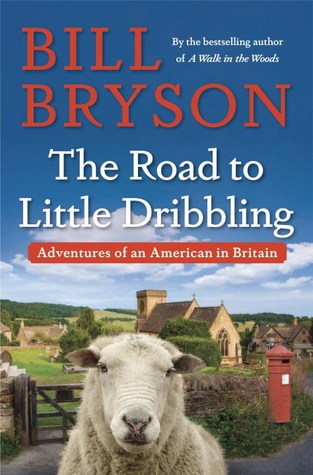
This is apparently book #2 to Notes From A Small Island. Which I have not read but mean to read someday. Luckily, you don't need to know the first book to enjoy this one.
I always enjoy Bryson's books and this one was no different. You get entertainment, interesting history, and a lot of information that you can spring on people out of the blue, which, frankly, is my favorite part about Bryson's books.
Before heading back to America, Bryson sets out on a road trip around his beloved adopted country and takes us to some tiny little villages and big cities. If you like to armchair travel, pick this one up! And, I'm guessing, pick up the first one too!
Monday, March 28, 2016
Tuesday, March 15, 2016
Reaching Out With No Hands: Reconsidering Yoko Ono by Lisa Carver
My friend lent me this book. I'm not a Yoko Ono fan. I barely even realize Yoko exists, to be quite honest. I'm also not a big Beatles fan - I'm more of a Rolling Stones gal. I think it's ridiculous that people blamed Ono for splitting up the Beatles. If it were that easy to break up a band, then they were destined to break up.
Since she's not on my radar, I thought I'd try this book to see what she is about. I also like Lisa Carver (having read Drugs are Nice quite a while back). In the end, Ono seems unique and unapologetic. I don't think she made it on to my radar.
There were bits of this book that I completely loved, bits I rolled my eyes at Carver and declared her overreaching adoration annoying and bits that made me think about art a little differently. While I have been struggling with issues of people either disliking me or not wanting me involved in something (work-wise, personally I think people are solidly "ok" with me), I took some of the comments to heart. Ono has been, and still is, universally hated. Universally criticized and condemned. But she remains hopeful, positive and keeps creating art. She keeps pushing people to peace, even when it seems ridiculous, like explaining that if she had been Hitler's girlfriend, he would have been a peaceful, nice man. Her art is thought provoking, if people care to think about it. Her squalling and guttural noises may not qualify as music to you but they resonate with some.
All in all, Ono is unabashedly herself, regardless of the situation she is put in. And she'd like for you to be the same. Even if Ono isn't on your radar, this was an interesting read into her life.
Since she's not on my radar, I thought I'd try this book to see what she is about. I also like Lisa Carver (having read Drugs are Nice quite a while back). In the end, Ono seems unique and unapologetic. I don't think she made it on to my radar.
There were bits of this book that I completely loved, bits I rolled my eyes at Carver and declared her overreaching adoration annoying and bits that made me think about art a little differently. While I have been struggling with issues of people either disliking me or not wanting me involved in something (work-wise, personally I think people are solidly "ok" with me), I took some of the comments to heart. Ono has been, and still is, universally hated. Universally criticized and condemned. But she remains hopeful, positive and keeps creating art. She keeps pushing people to peace, even when it seems ridiculous, like explaining that if she had been Hitler's girlfriend, he would have been a peaceful, nice man. Her art is thought provoking, if people care to think about it. Her squalling and guttural noises may not qualify as music to you but they resonate with some.
All in all, Ono is unabashedly herself, regardless of the situation she is put in. And she'd like for you to be the same. Even if Ono isn't on your radar, this was an interesting read into her life.
Friday, March 11, 2016
Extremely Loud and Incredibly Close by Jonathan Safran Foer
If you can listen to the audio book of this, I highly recommend for it's ability to break your heart. I'm quite sure the printed word will do the same but strive for heartbreak.
Our main narrator is Oskar Schell. A nine-year-old boy who lost his dad in the September 11th attack on the World Trade Center. As with most of the family who lost loved ones that day, there was no body to bury which makes it difficult to accept the loss. Oskar finds a key in his dad's closet about a year or so after they buried an empty coffin. Oskar believes that the key must be very important for his dad to have it and he sets out with the key and the only clue that came with it: Black. His quest is to talk to every Black in NYC in order to find the lock for the key.
We also get narration from Oskar's grandma through letters. She adores Oskar but the more we learn about her back story, the more tragic it is.
Our third narrator is Oskar's grandpa, who left his grandma the day after she said she was pregnant with Thomas, Oskar's dad.
This is a terribly tragic family.
Oskar's quest does wrap up but it's the journey to the end that is so well worth taking. Oskar is an unusual boy but as we walked on, I really grew to love him. The tragedy that seems to plague this family is heartbreaking and, quite honestly, even in 2016, the attack of 9/11 is still very fresh in memory, so it's even more haunting.
This is a wonderful book, so well worth reading. From reading other reviews, it sounds like reading the book is less preferred because of the difficulty in understanding which narrator is speaking, Try the audio book. With 3 separate readers, it makes it very easy.
Our main narrator is Oskar Schell. A nine-year-old boy who lost his dad in the September 11th attack on the World Trade Center. As with most of the family who lost loved ones that day, there was no body to bury which makes it difficult to accept the loss. Oskar finds a key in his dad's closet about a year or so after they buried an empty coffin. Oskar believes that the key must be very important for his dad to have it and he sets out with the key and the only clue that came with it: Black. His quest is to talk to every Black in NYC in order to find the lock for the key.
We also get narration from Oskar's grandma through letters. She adores Oskar but the more we learn about her back story, the more tragic it is.
Our third narrator is Oskar's grandpa, who left his grandma the day after she said she was pregnant with Thomas, Oskar's dad.
This is a terribly tragic family.
Oskar's quest does wrap up but it's the journey to the end that is so well worth taking. Oskar is an unusual boy but as we walked on, I really grew to love him. The tragedy that seems to plague this family is heartbreaking and, quite honestly, even in 2016, the attack of 9/11 is still very fresh in memory, so it's even more haunting.
This is a wonderful book, so well worth reading. From reading other reviews, it sounds like reading the book is less preferred because of the difficulty in understanding which narrator is speaking, Try the audio book. With 3 separate readers, it makes it very easy.
Tuesday, March 1, 2016
The Bazaar of Bad Dreams by Stephen King
As much as I love King's epic horror novels, I find myself running more eagerly towards his short stories. He is one of the masters of the short story.
The Bazaar has 20 stories, ranging from "Yup, that was good" to "Holy crap, seriously?". King is very good at bringing in monsters to scare the reader, but he's just as good at showing how humans are pretty good monsters on their own. One of the reasons I always recommend Full Dark, No Stars.
Some of the stories have been published before. I remember that Mile 81 was a Kindle single at one point and had read it then. Others, such as Mister Yummy, Obits and Bad Little Kid, have never been published. King tells you a bit about each story before it starts, a little insight to his inspiration.
Some, such as The Dune, end on a note that leaves everything to your imagination. Some endings, Under the Weather, are predictable but nonetheless disturbing.
All in all, this was a really good collection of little disturbances to cuddle up with on dark nights. Have a bourbon, get your book and leave the lights on.
The Bazaar has 20 stories, ranging from "Yup, that was good" to "Holy crap, seriously?". King is very good at bringing in monsters to scare the reader, but he's just as good at showing how humans are pretty good monsters on their own. One of the reasons I always recommend Full Dark, No Stars.
Some of the stories have been published before. I remember that Mile 81 was a Kindle single at one point and had read it then. Others, such as Mister Yummy, Obits and Bad Little Kid, have never been published. King tells you a bit about each story before it starts, a little insight to his inspiration.
Some, such as The Dune, end on a note that leaves everything to your imagination. Some endings, Under the Weather, are predictable but nonetheless disturbing.
All in all, this was a really good collection of little disturbances to cuddle up with on dark nights. Have a bourbon, get your book and leave the lights on.
Sunday, February 28, 2016
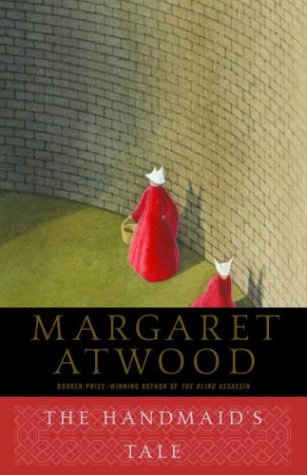
The Handmaid's Tale by Margaret Atwood
I've always been more of a fan of dystopian vs utopian, probably because I'm a little on the pessimistic side. I remember reading this book either in my senior year of high school or my first year of college. Either way, I was young enough to be horrified at the picture it painted.
Reading this book also accomplished one of my goals this year as well: Two books need to be re-reads (The Stand is the other re-read).
So let's delve into Atwood's picture:
In the Republic of Gilead, Offred is a Handmaid. She lives, now, in a world where women are no longer allowed to read, where they are used for breeding only, if they have viable ovaries. Before this world, Offred (not her true name) had a husband, a job, a child. She had a life. The Congress and the President were slaughtered, the Constitution was suspended and women suddenly lost all of their rights everywhere. Childbirth had been on a decline so children are a valuable commodity. Offred's child is stolen and given to a high-ranking couple. Her husband is killed or captured and Offred is forced to become a Handmaid.
Each Handmaid takes a new name with each house they are forced to live in. Fred is the Commander who she is given to so she becomes Offred. Each month, there is a Ceremony where the Commander tries to impregnate Offred. If she fails to become pregnant, she is moved to another house, gets a new name and starts the same process over.
This world is horrifying. The novel is told by Offred and the manuscript was found without any resolution. We have no idea how it ended and whether she is safe. I recall taking a long time to read this book the first time and this time was no exception. The world we are asked to enter is a terrible one that makes me incredibly angry - so kudos to Atwood for igniting emotions!
This book is on the 1,001 Books To Read Before You Die list and I fully encourage you to read it.
In the meantime,
Reading this book also accomplished one of my goals this year as well: Two books need to be re-reads (The Stand is the other re-read).
So let's delve into Atwood's picture:
In the Republic of Gilead, Offred is a Handmaid. She lives, now, in a world where women are no longer allowed to read, where they are used for breeding only, if they have viable ovaries. Before this world, Offred (not her true name) had a husband, a job, a child. She had a life. The Congress and the President were slaughtered, the Constitution was suspended and women suddenly lost all of their rights everywhere. Childbirth had been on a decline so children are a valuable commodity. Offred's child is stolen and given to a high-ranking couple. Her husband is killed or captured and Offred is forced to become a Handmaid.
Each Handmaid takes a new name with each house they are forced to live in. Fred is the Commander who she is given to so she becomes Offred. Each month, there is a Ceremony where the Commander tries to impregnate Offred. If she fails to become pregnant, she is moved to another house, gets a new name and starts the same process over.
This world is horrifying. The novel is told by Offred and the manuscript was found without any resolution. We have no idea how it ended and whether she is safe. I recall taking a long time to read this book the first time and this time was no exception. The world we are asked to enter is a terrible one that makes me incredibly angry - so kudos to Atwood for igniting emotions!
This book is on the 1,001 Books To Read Before You Die list and I fully encourage you to read it.
In the meantime,
“Nolite te bastardes carborundorum.”
Saturday, February 13, 2016
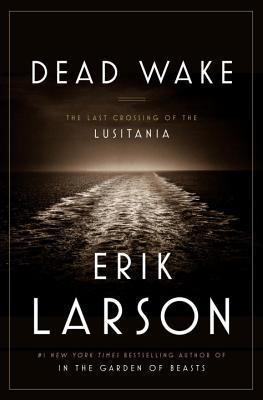
Dead Wake: The Last Crossing of The Lusitania by Erik Larson
One of my goals for myself this year was to take my total reading goal (50 books) and devote 10% of that to historical books in the non-fiction realm. I mistakenly thought Dead Wake was fiction so it now counts as my historical goal.
Larson writes such an engaging story that you flow along with it like it is fiction. Hence, my mistake.
I choose to add the historical goal because of the current landscape in America. The old adage stands true:
You know that the Lusitania sank. It happened a few years after the Titanic sinking. But my guess was, there was more to it. Things that we could have learned from, backroom dealings that could have made a difference in saving over 1,100 lives. I was right.
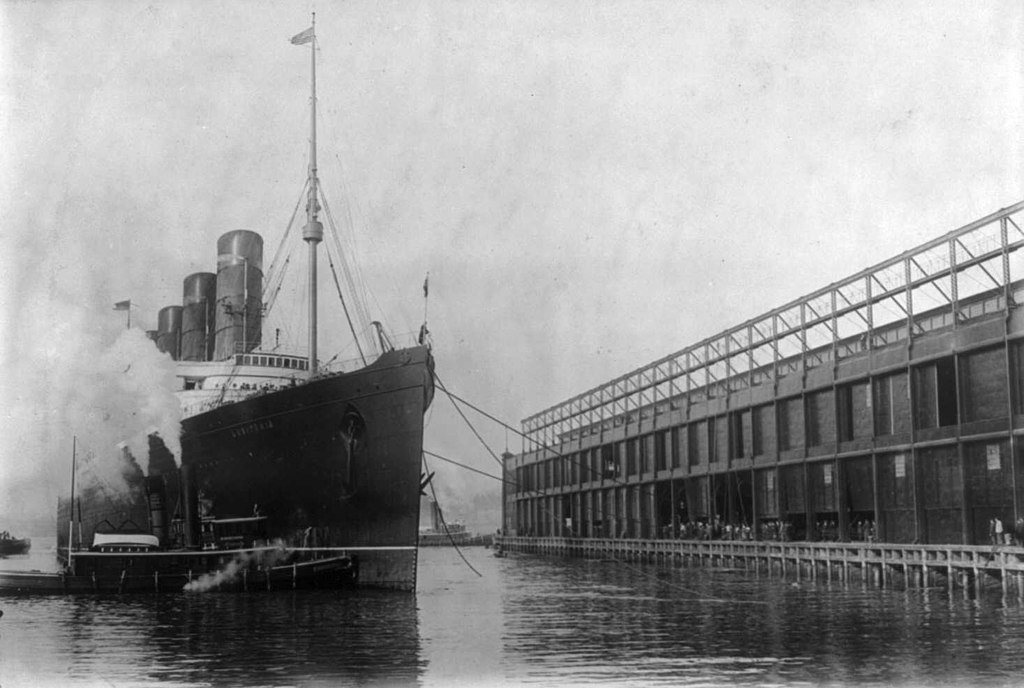
The Lusitania was a British ship, one of their most regal and best passenger liners, that was embarking on a trip from NY to Liverpool. They did learn from the Titanic disaster and made sure there were enough lifeboats for every soul on board. How little that actually helped.
Captain William Thomas Turner was at the helm for this journey. He was already crippled by British orders in that 1) he had to take on more passengers from another ship that was being commandeered by the Royalty for war usage (that caused a 2 hour delay in leaving port) and 2) He had been ordered to not fire off all 4 boilers for speed in order to save money. He could use 3 and only travel about 20 knots, top speed, instead of the famed 25 knots that The Lusitania was known for. Speed could have saved the ship in the end, along with those extra 2 hours.
Keep in mind this is wartime, First World War, and Germany is already using U boats (aka submarines) to torpedo any ship they deem suitable. Most passenger liners were getting convoyed to their destination across waters under attack by destroyers. Interestingly enough, The Lusitania did not get that type of assistance.
As I read, it became obvious that there were many things that the British Intelligence chose to keep to themselves that could have made a difference to the passengers and crew of The Lusitania. Did they have an end game? Why gamble with The Lusitania, as renowned and regal as it was, and the lives on board?
America was neutral at this time in the war under Woodrow Wilson. It could be a conspiracy theory but I call it a theory, because it's hard to look at this disaster and not come to the conclusion that Britain wanted America to come into the war and fight on their side. What better would cause the sway of public opinion than the tragedy of The Lusitania being torpedoed by a German U boat and over 100 American lives being lost?
But we still did not go to war.
Through propaganda and use of Intelligence and pressure, Britain finally was able to convince Wilson to enter the First World War (clearly not called the First yet.....).
A lot of what British Intelligence did to manipulate world opinion, including standing back and letting over 1000 people die, disgusted me. But in the end, I was more disgusted by the treatment of Captain Turner. The Royalty needed a scapegoat to blame the entire incident on and they chose Turner. Even Churchill went after Turner in order to keep their super-secret Room 40 Intelligence a super secret.
Larson, again, is an amazing writer who brings history to life and places you right in the middle. I highly recommend this book. And ask you: did we learn from this? Or are these very things still happening? I know what my opinion is.
Larson writes such an engaging story that you flow along with it like it is fiction. Hence, my mistake.
The Lusitania in NY
I choose to add the historical goal because of the current landscape in America. The old adage stands true:
Those who cannot remember the past are condemned to repeat it. (George Santayana)When I was reading Cleopatra, I kept thinking that the current political landscape looks the same as Cleopatra's political landscape, although we have less bloodshed. The same backbiting, sabotage, propaganda, etc are still going on today. And sadly, we still have the masses of people that believe the lies. If we haven't learned anything from the BC period, what else have we forgotten?
You know that the Lusitania sank. It happened a few years after the Titanic sinking. But my guess was, there was more to it. Things that we could have learned from, backroom dealings that could have made a difference in saving over 1,100 lives. I was right.
The Lusitania was a British ship, one of their most regal and best passenger liners, that was embarking on a trip from NY to Liverpool. They did learn from the Titanic disaster and made sure there were enough lifeboats for every soul on board. How little that actually helped.
Captain William Thomas Turner was at the helm for this journey. He was already crippled by British orders in that 1) he had to take on more passengers from another ship that was being commandeered by the Royalty for war usage (that caused a 2 hour delay in leaving port) and 2) He had been ordered to not fire off all 4 boilers for speed in order to save money. He could use 3 and only travel about 20 knots, top speed, instead of the famed 25 knots that The Lusitania was known for. Speed could have saved the ship in the end, along with those extra 2 hours.
Keep in mind this is wartime, First World War, and Germany is already using U boats (aka submarines) to torpedo any ship they deem suitable. Most passenger liners were getting convoyed to their destination across waters under attack by destroyers. Interestingly enough, The Lusitania did not get that type of assistance.
As I read, it became obvious that there were many things that the British Intelligence chose to keep to themselves that could have made a difference to the passengers and crew of The Lusitania. Did they have an end game? Why gamble with The Lusitania, as renowned and regal as it was, and the lives on board?
America was neutral at this time in the war under Woodrow Wilson. It could be a conspiracy theory but I call it a theory, because it's hard to look at this disaster and not come to the conclusion that Britain wanted America to come into the war and fight on their side. What better would cause the sway of public opinion than the tragedy of The Lusitania being torpedoed by a German U boat and over 100 American lives being lost?
But we still did not go to war.
Through propaganda and use of Intelligence and pressure, Britain finally was able to convince Wilson to enter the First World War (clearly not called the First yet.....).
A lot of what British Intelligence did to manipulate world opinion, including standing back and letting over 1000 people die, disgusted me. But in the end, I was more disgusted by the treatment of Captain Turner. The Royalty needed a scapegoat to blame the entire incident on and they chose Turner. Even Churchill went after Turner in order to keep their super-secret Room 40 Intelligence a super secret.
Larson, again, is an amazing writer who brings history to life and places you right in the middle. I highly recommend this book. And ask you: did we learn from this? Or are these very things still happening? I know what my opinion is.
Tuesday, January 19, 2016
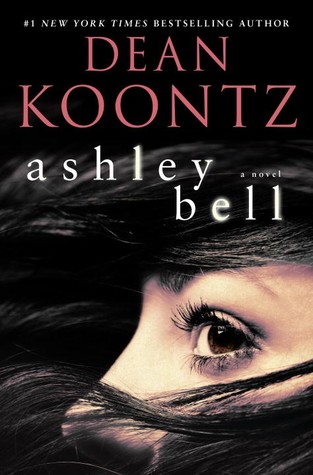
Ashley Bell by Dean Koontz
Another lovely review book from LibraryThing Early Reviewers program. As a bonus, I already loved Koontz.
This one confused me and caused me to re-read the last chapter a few times. I think I get it now, although I do think I missed some nuances somewhere in the tome. Either way, this was a really great read with a twist I didn't see coming (although others may have).
Our basic plot revolves around Bibi Blair, an young woman who has published her first novel and has an active imagination, as backstory will share. She is diagnosed with brain cancer and told she has a year to live. The next day, her cancer is 100% gone and she has a clean bill of health. Her parents send in a Scrabblemancer to understand why Bibi was saved from cancer and there is an answer
To save Ashley Bell.
See that rabbit hole? We're about to dive down it.
The Wrong People get wind of this and begin a rather scary and hellish pursuit of Bibi to stop her from saving Ashley.
And....twist.
Things got pretty weird and creepy midway through the book and Bibi's quest. Creepy enough that a random tap on my window sent me scooting out of my chair and checking the locks. Thanks, Mr. Koontz!
Since this is fairly new, I'm not going to review the twist or ending except that I really enjoyed it. I don't recall reading a book that traveled along these planes before and I tore through the remaining half in an evening/into the night. I'm torn on the ending, as I have a feeling some characters are still not what they seemed. The ending also had a sequel vibe to it (am I wrong??).
Well worth picking up and scratching your head over.
This one confused me and caused me to re-read the last chapter a few times. I think I get it now, although I do think I missed some nuances somewhere in the tome. Either way, this was a really great read with a twist I didn't see coming (although others may have).
Our basic plot revolves around Bibi Blair, an young woman who has published her first novel and has an active imagination, as backstory will share. She is diagnosed with brain cancer and told she has a year to live. The next day, her cancer is 100% gone and she has a clean bill of health. Her parents send in a Scrabblemancer to understand why Bibi was saved from cancer and there is an answer
To save Ashley Bell.
See that rabbit hole? We're about to dive down it.
The Wrong People get wind of this and begin a rather scary and hellish pursuit of Bibi to stop her from saving Ashley.
And....twist.
Things got pretty weird and creepy midway through the book and Bibi's quest. Creepy enough that a random tap on my window sent me scooting out of my chair and checking the locks. Thanks, Mr. Koontz!
Since this is fairly new, I'm not going to review the twist or ending except that I really enjoyed it. I don't recall reading a book that traveled along these planes before and I tore through the remaining half in an evening/into the night. I'm torn on the ending, as I have a feeling some characters are still not what they seemed. The ending also had a sequel vibe to it (am I wrong??).
Well worth picking up and scratching your head over.
Subscribe to:
Posts (Atom)