Tuesday, March 27, 2018

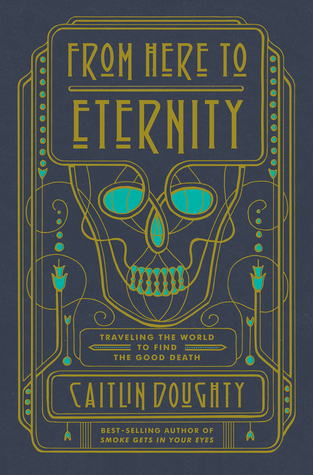
From Here to Eternity: Traveling the World to Find the Good Death by Caitlin Doughty


I'll start off saying that I love this woman. I read Smoke Gets In Your Eyes back in 2015 and fell in love with her idea of the Good Death. Why is death so terrifying for Americans? Why are we, as the living, so far removed from it? When my dad passed in 2009, I remember being upset that we were ushered out of his room and sent to the waiting room while the funeral home took over. I remember being upset they shaved his mustache (he was never without it) and that we only saw him again when it was time for visitation. He was my DAD. And I wasn't allowed to be there.

Caitlin put into words what I was feeling. Americans sanitize death too much. We're not allowed to grieve with the bodies of our loved ones. Everything is swept up and away and you need to slap a smile on your face because everyone else has moved on, why can't you?

In From Here To Eternity, Caitlin visits several cultures, here and abroad, to learn about death customs. This was just fascinating to me. Ever since dad died and we went through the whole thousands of dollars funeral experience, I knew that I wouldn't be taking the same route. Caitlin's work, including her Ask A Mortician YouTube channel, led me to natural burials. And now I know where my body will end up.


Some of the places Caitlin visits are Colorado. A small town called Crestone built their own pyre to send their dead off in a respectful manner. Indonesia: where corpses are mummified in Death Houses and brought out every so often to be cleaned and cared for by their families. This culture has a very hands on idea of taking care of their families. Mexico is an obvious place to go for Dias de los Muertos. In North Carolina, on a body farm, they are working on recomposition of bodies, essentially composting a corpse and giving the compost back to the family.  (Fun fact: ashes from cremation are completely devoid of any nutrients so even if you scatter the ashes in a garden, they do no good).

Spain placed the corpses behind glass to give the sense of close up but not. I think my favorite was Japan and the Buddhist Temple of Koukokuji. Japan has the highest cremation rate (99.9%) and some of those ashes are kept at Ruriden. It's high tech mixed with Buddhism.

https://youtu.be/y9m1jlYl1qs

Essentially, mourners call up their person via key card. The Buddha associated with their loved one lights up to show them where to go. 

In Boliva, I will admit that the concept of natitas might have been a little much for me. (more info at the link). I always find it difficult when faith crosses into "magic" but these people have a culture and I do appreciate that they found a way to deal with death.

Lastly, a natural burial in California at the Joshua Tree cemetery.


Natural vs. Traditional burials

Caitlin's TED talk


Caitlin is not only intelligent and awesome, she's a natural writer who writes about the terrifying side of life with wit and humor. You get information you should have (no body HAS to be embalmed....did you know that?) in easy doses. HIGHLY recommend her books, blog, and YouTube channel. Death not terrifying. It's a part of life.


Friday, March 23, 2018

Braving The Wilderness by Brene Brown

I've heard of Brene Brown and wanted to give her a try. I didn't choose this book for any particular reason except I liked the subtitle: The Quest for True Belonging and The Courage to Stand Alone. I've found, when the situation arises, I'm usually the one out there alone and speaking up. Alone and doing.

I listened to the audiobook read by Brene.  There were so many points where I just kept nodding my head. It's clear she does a lot of research for her books and has a lot of facts and points to back up her advice.

Here's an excerpt: https://brenebrown.com/blog/2017/09/07/braving-the-wilderness-excerpt/

One of the pieces of advice that I really appreciated was: It's easy to hate from far away. Get in close. She frames a lot of her advice in the context of where America is politically. This piece is very true. I have friends, great friends, whose political views are polar opposites of my views. But I don't hate them. I know them so well they might as well be family. But I shrug off our differences. So why is it so easy to get angry at strangers or the masses when they disagree? Because you haven't moved in close to them. Someone at a protest makes you angry? Move in and talk to them. It's such a novel concept except it's not. It should be common sense.

Her section on how we dehumanize people in order to make it easier to tear them down was difficult to read because of the truth. In big ways (Holocaust) and little ways we dehumanize others so we don't feel bad about how they are treated. Again, I'm shocked and not surprised we do this. And yes, the we includes myself. Some of the examples Brown gives hit a little too close to home.

I also appreciated the advice of Hold Hands With Strangers. Get in there and feel all the pain and all the joy. It connects humans better than social media. Being there, showing up, and listening is so important but rarely done.

I've been trying to take her advice to heart and make some improvements. Some days are much better than others, obviously, but imagine how things would work if everyone tried to just show up and be with their fellow man.

*insert hand holding and kumbaya singing*


Tuesday, March 6, 2018

The Walking Dead: Compendium Three by Robert Kirkman et al.

I started this monster in September 2016 and just finished it the other day. Once again, no, it really didn't take me that long to read. But I got caught up in the show and I really didn't want to know what happened, or what could happen. At the mid-season finale, when {spoiler} got bit, I knew I needed to finish this compendium.

Let me just say that the show has deviated quite a bit. What upset me on the show didn't happen in the comics except I ended up getting completely upset by the ending of the compendium and just have to say DO NOT KILL {SPOILER}, DAMMIT.

So the beginning of this compendium, Negan is still a thing, Abraham is alive and they are not yet broken. The ending is way beyond the show and we get an all new villain for the survivors to deal with because Negan is no longer a threat......or is he??

This is a good one. I'm eager to see The Whisperers played out on the show but DO NOT KILL {SPOILER}.......DAMMIT.


Sunday, February 18, 2018

Deep Freeze by John Sandford

Another Fuckin' Flowers book, number 10 to be exact. Although it does seem like his nickname of That Fuckin' Flowers is being phased out and he's just Virgil now. I'm ok with that.

Virgil is called to Trippton, MN, which you may remember from Deadline, book number 8. This time the body of one of the richest women in Trippton has been "caught" by a fisherman. Except, we already know who killed Gina Hemming, because the first chapter introduced us to Bug Boy, David Birkmann and showed us the murder. But wait, David didn't throw Gina's body in the frozen river. He staged an accident. So.....how did she get there?

Naturally, we have to have another case thrown in to make Virgil's life more complicated. Margaret Griffin shows up in Trippton, an ex-L.A. cop, paid by Mattel, to come put a stop to counterfeit Barbies. Not JUST Barbies. These Barbie's have a special...."feature". As do the Ken dolls. Whew. Who thinks this stuff up?

I really enjoyed how Virgil handled this one. I had to re-read his solving of the murder and was damn impressive at how his brain works.

Fully recommend this one, no need to even start at the beginning of the series.


Sunday, February 11, 2018

Overdue Podcast - Moby Dick

I was searching out podcasts of other folk's opinions on Moby Dick. This was one of my favorites and is now on my list of podcasts to listen to on a regular basis.

Overdue Podcast

Wednesday, February 7, 2018

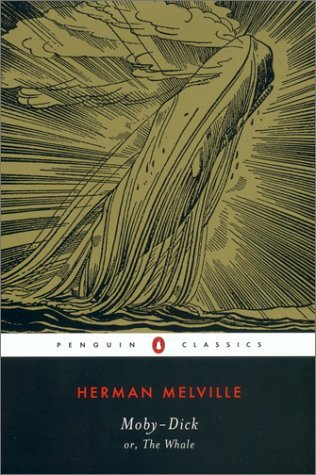
Moby Dick by Herman Melville

I FINALLY FINISHED IT!!!

My 2017 Big Damn Classic as voted by YOU, the readers, (thanks a lot)! I started listening to this in September 2017 and finished last night.

Librivox says this was only 24 hours long but, lordy, it felt longer sometimes. Stewart Wills is a fantastic reader so if you do dive into this book, find his version on Librivox.org.

So let's get into this, hmm? I'll admit that it took so long to listen to that the beginning of the book is a bit foggy but overall we are met with action and long descriptions. We are met with deep views into people called Savages and into savage people. At the heart of this, Melville delves into the people. I laughed that this was a book with 133 chapters learning about the characters and 2 chapters watching them die. It was actually a terribly sad ending.

Call me Ishmael.

One of the most famous opening lines leads us into Ishmael's narrative about trying to get a job on a whaling ship in Nantucket. He arrives at the Spouter's Inn and is forced to share a bed since they were full. He ends up with Queequeg (or Hedgehog as people kept calling him, which made me laugh harder than it should), a heavily tattooed pagan cannibal who is also an excellent harpooner. Ishmael and Queequeg quickly become friends and soon head to the Pequod to try and get work. Queequeg is a given based on his ability with a harpoon. Ishmael gets in reluctantly.

Ahab is the ship's captain and isn't seen for a long while after the ship has sailed. Chief Mate Starbuck handles everything in the Captain's absence. Second Mate, Stubb and Third Mate, Flask make up the main crew. After the ship is on it's way, Ahab gathers the crew to tell them their goal is to find the white whale, Moby Dick. He offers up a reward for anyone who helps capture and kill the whale. Here we know that, technically, this ship is set for whaling in general. Ahab has now made this voyage his personal vendetta against the whale that took his leg.

Not everyone is pleased with this. The longer the voyage, the less pleased they are with Ahab's direction. At one point, Ahab's death was on the mind of his Chief Mate but, alas, nothing came of it.

In the end, Moby Dick is spotted and, for 3 days, Ahab orders his men out to try and kill the whale. Moby is an angry whale. He wreaks havoc on Ahabs crew: destroying the whale boats, sinking the Pequod and killing everyone on board and finally killing Ahab and everyone in the whale boats.

Except for Ishmael. Who is found days later, clinging to a buoy in the middle of the ocean.


I'm going to go out on a limb and say that vengeance is bad. Ahab was cold and heartless towards everyone around him. He was laser-focused on his revenge against the white whale that nothing else, and no one else, mattered. Even when the men of his crew begged him to stop this chase so they would live to see their families, he turned a deaf ear.

There is so much more to this story that my summation doesn't do it justice. Is it worth reading? Yes, I think so. Some chapters nearly killed me but now I know the skeletal anatomy of a whale so there's extra trivia knowledge. I did enjoy meeting the characters and was truly saddened at their demise at the hands of Ahab's fury.

Firstly, there are movies, of which I have seen none:

In The Heart Of The Sea (with Chris Hemsworth, no less) Based on the true story of the Essex being rammed by a sperm whale

Moby Dick with Gregory Peck


And because this is funny!


Friday, February 2, 2018

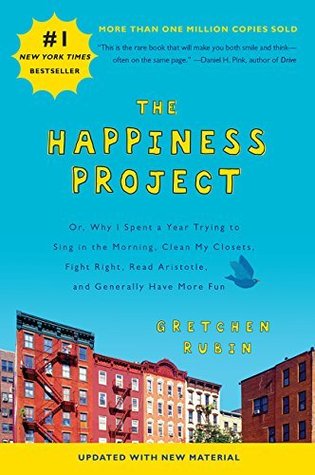
The Happiness Project by Gretchen Rubin

I had heard about this book from the Down Cellar Studio podcast. The host was embarking on her own Happiness Project and I was curious. We're already into February so I won't be starting my own project but I did pick up several tips I want to try.

Rubin researched what happiness is and how to achieve it then spent a year trying to live it. Each month focused on a different aspect and then December was a culmination of everything she learned. In the end, she was happier, although there were no means of measurement. It was interesting to read what her happiness definitions were (fighting right with her spouse, for one) and to see where she failed or where the advice failed her.

She tried a Pollyanna week, where she spoke no negativity, no snide remarks, no criticisms. She failed before she got out of bed. But she kept trying, over and over.

Happiness appears to be a trait you need to continually practice. There are people out there who do not want you to be happy. Situations can tax your spirit. But, like Buddhism, it's all about practice.

Enthusiasm is more important to mastery than innate ability, it turns out, because the single most important element in developing an expertise is your willingness to practice.

Some advice is curious, such as starting a collection. Rubin tried and then stopped. It just wasn't her. One of her main truths she followed in this project was "Be Gretchen". Being yourself, 100%, when the world is telling you what you should be doing is difficult, but Rubin recognized when the happiness advice was counter to her inner truth.

I marked a few passages and quotes to help me 'think happy':


One reason that challenge brings happiness is that it allows you to expand your self-definition. You become larger. Suddenly you can do yoga or make homemade beer or speak a decent amount of Spanish. Research shows that the more elements make up your identity, the less threatening it is when any one element is threatened.


Studies show that consistently grateful people are happier and more satisfied with their lives; they even feel more physically healthy and spend more time exercising.

Gratitude brings freedom from envy, because when you’re grateful for what you have, you’re not consumed with wanting something different or something more.

One of the best ways to make yourself happy is to make other people happy. One of the best ways to make other people happy is to be happy yourself.

What I really took from this is compassion and gratitude are key. Again, much like Buddhism. Rubin delved into Buddhism a bit and worked on her mindfulness. That is also key to being grateful and paying attention to now.

It takes work to be happy, but in the end, it not only benefits you, it benefits those around you.